







Genesis Chapter 36
Genesis Chapter 36
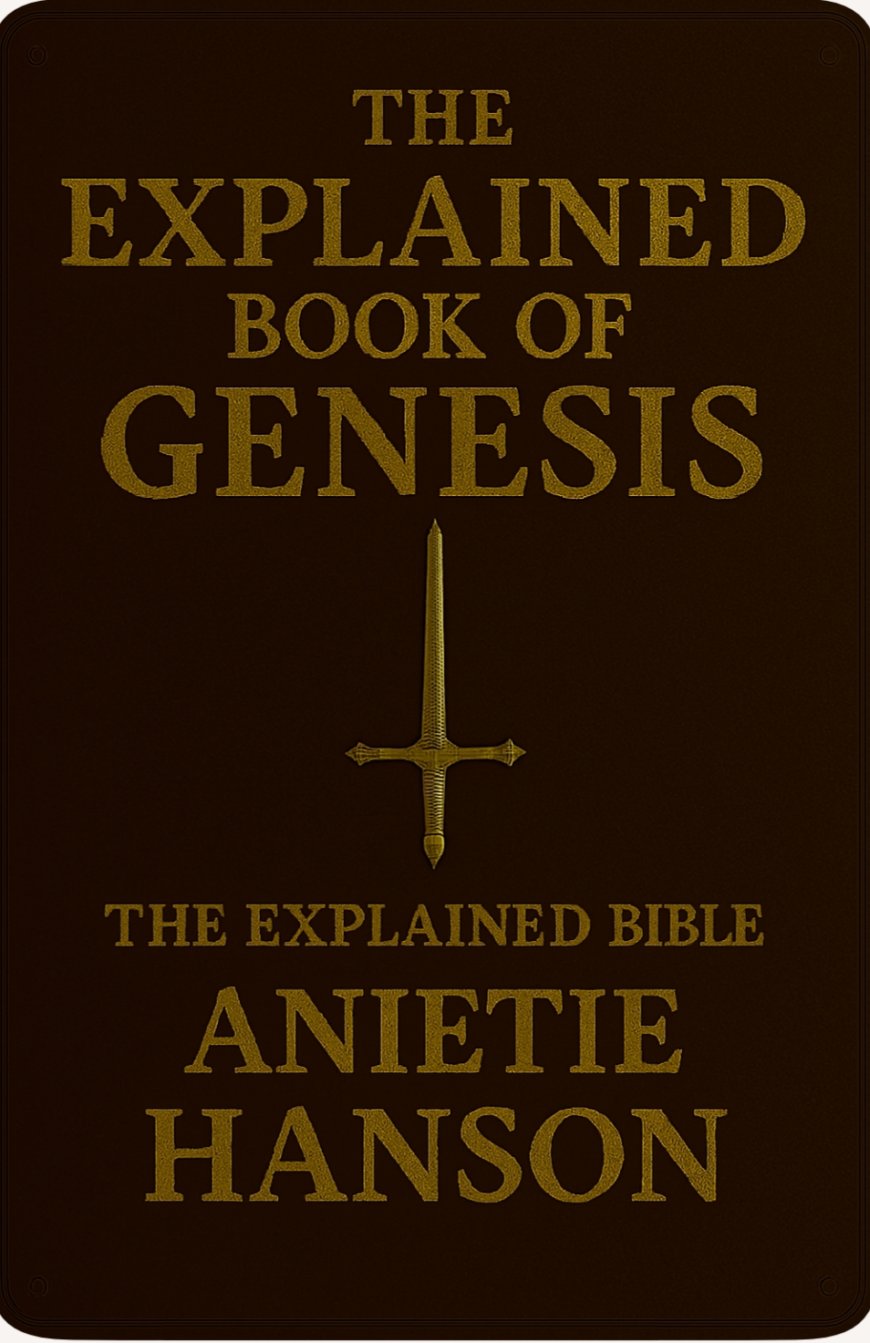
The Explained Book of Genesis Chapter 36 by Anietie Hanson
Study Bible: Genesis Chapter 36 – The Generations of Esau
Introduction
Genesis Chapter 36 details the genealogy of Esau, Jacob’s brother, who becomes the father of the Edomites. This chapter serves as an important record of the fulfillment of God’s promise to make Esau’s descendants a great nation, despite his secondary position in the Abrahamic covenant compared to Jacob. The chapter highlights Esau’s alliances, his migration to the land of Seir, and the development of a distinct kingdom through his lineage. It demonstrates God’s faithfulness in blessing both lines of Abraham, even though the covenant of promise remains with Jacob.
With 43 verses, Genesis 36 showcases the complexity of relationships, the establishment of nations, and the fulfillment of divine promises. Let us explore each verse deeply, drawing connections and meanings as guided by the World English Bible (WEB).
Verse-by-Verse Explanation
Genesis 36:1
"Now this is the history of the generations of Esau (that is, Edom)."
Explanation: The phrase “generations of Esau” introduces the genealogy, emphasizing Esau as the forefather of the Edomites. The name Edom (meaning “red”) reflects the events of Genesis 25:30, when Esau sold his birthright for red stew. This dual name links Esau’s identity to his descendants and their eventual nation. Malachi 1:2–3 highlights God’s sovereign choice of Jacob over Esau: "Jacob I have loved, but Esau I hated." Despite this, Esau’s genealogy illustrates God’s provision and faithfulness.
Genesis 36:2–3
"Esau took his wives from the daughters of Canaan: Adah the daughter of Elon the Hittite, Oholibamah the daughter of Anah, the daughter of Zibeon the Hivite, and Basemath, Ishmael’s daughter, sister of Nebaioth."
Explanation: Esau’s Canaanite wives reflect his disregard for the Abrahamic tradition of marrying within their kin (Genesis 28:1–2). Adah, Oholibamah, and Basemath each bring diverse cultural and tribal connections, but also highlight Esau’s integration with Canaanite society. Notably, Basemath, Ishmael’s daughter, represents an alliance within Abraham’s extended family, showing Esau’s attempt to align with his heritage. However, these unions further distance Esau’s lineage from the covenant line of Jacob.
Genesis 36:4–5
"Adah bore to Esau Eliphaz. Basemath bore Reuel. Oholibamah bore Jeush, Jalam, and Korah. These are the sons of Esau, who were born to him in the land of Canaan."
Explanation: The sons of Esau represent the beginnings of a nation, fulfilling God’s promise to Abraham of numerous descendants (Genesis 17:4). Eliphaz, Reuel, Jeush, Jalam, and Korah form the foundation of Edom’s future leaders. The phrase “born in the land of Canaan” contrasts with Jacob’s eventual return to the covenant land, reflecting Esau’s separation from the divine promise. Romans 9:8 reminds us: "It is not the children of the flesh who are children of God, but the children of the promise are counted as heirs."
Genesis 36:6–8
"Esau took his wives, his sons, his daughters, and all the members of his household, with his livestock, all his animals, and all his possessions, which he had gathered in the land of Canaan, and went into a land away from his brother Jacob. For their substance was too great for them to dwell together, and the land of their travels couldn’t bear them because of their livestock. Esau lived in the hill country of Seir. Esau is Edom."
Explanation: Esau’s migration to Seir reflects both practical necessity and divine providence. The separation mirrors Abraham and Lot’s division (Genesis 13:6), where abundant possessions necessitated parting ways. The hill country of Seir, later synonymous with Edom, becomes Esau’s inheritance, fulfilling Genesis 27:39–40: "Your dwelling will be away from the richness of the earth." This move solidifies Esau’s role as the father of the Edomites, distinct from Jacob’s covenantal line.
Genesis 36:9
"This is the history of the generations of Esau the father of the Edomites in the hill country of Seir."
Explanation: This verse formally introduces the genealogy of Esau, emphasizing his role as the father of the Edomites and establishing his domain in the hill country of Seir. The title Edomites links directly to Esau’s alternate name, Edom (Genesis 25:30). This connection marks the separation of Esau’s lineage from Jacob’s covenantal line, as God had declared two distinct nations (Genesis 25:23). Deuteronomy 2:5 reiterates God’s role in granting Seir to Esau’s descendants: "I have given Mount Seir to Esau for a possession."
Genesis 36:10–11
"These are the names of Esau’s sons: Eliphaz, the son of Adah, Esau’s wife; and Reuel, the son of Basemath, Esau’s wife. The sons of Eliphaz were Teman, Omar, Zepho, Gatam, and Kenaz."
Explanation: Eliphaz and Reuel are Esau’s primary sons, and their descendants form the tribal structure of the Edomites. Eliphaz’s sons—including Teman, a later chief (Genesis 36:15)—become significant figures. The region of Teman is often associated with wisdom, referenced in Job 2:11, where Eliphaz the Temanite is one of Job’s friends. This connection underscores Edom’s prominence in the ancient Near East and its role in biblical narratives.
Genesis 36:12
"Timna was concubine to Eliphaz, Esau’s son, and she bore to Eliphaz Amalek. These are the descendants of Adah, Esau’s wife."
Explanation: Timna, a concubine of Eliphaz, bears Amalek, the progenitor of the Amalekites, who become one of Israel’s most persistent enemies (Exodus 17:8–16). The inclusion of Timna highlights the interconnectedness of Esau’s descendants and the surrounding nations. Deuteronomy 25:19 foretells the Amalekites’ eventual destruction: "You shall blot out the memory of Amalek from under heaven." This verse introduces the ongoing tension between Edom and Israel’s covenantal destiny.
Genesis 36:13–14
"These are the sons of Reuel: Nahath, Zerah, Shammah, and Mizzah. These were the sons of Basemath, Esau’s wife. These were the sons of Oholibamah, the daughter of Anah, the daughter of Zibeon, Esau’s wife. She bore to Esau Jeush, Jalam, and Korah."
Explanation: Reuel’s sons and Oholibamah’s sons expand the genealogical record, showcasing the diversity of Esau’s lineage. These names reflect tribal divisions and alliances among the Edomites. The mention of Oholibamah, a Hivite, highlights Esau’s integration into Canaanite society, symbolizing his distance from the pure Abrahamic line. Despite this, God fulfills His promise to make Esau a great nation (Genesis 25:23).
Genesis 36:15–16
"These are the chiefs of the sons of Esau: the sons of Eliphaz, Esau’s firstborn: Chief Teman, Chief Omar, Chief Zepho, Chief Kenaz, Chief Korah, Chief Gatam, Chief Amalek. These are the chiefs who came of Eliphaz in the land of Edom. These are the sons of Adah."
Explanation: The term chiefs (or leaders) signifies the tribal heads of Esau’s descendants, reflecting the political and social structure of Edom. Teman and Amalek, among others, become prominent figures in the history of this nation. Job 2:11 associates Teman with wisdom and influence. This structure mirrors the developing tribal leadership of Israel, showcasing God’s faithfulness in fulfilling promises to both Jacob and Esau.
Genesis 36:17–18
"These are the sons of Reuel, Esau’s son: Chief Nahath, Chief Zerah, Chief Shammah, Chief Mizzah. These are the chiefs who came of Reuel in the land of Edom. These are the sons of Basemath, Esau’s wife. These are the sons of Oholibamah, Esau’s wife: Chief Jeush, Chief Jalam, and Chief Korah. These are the chiefs who came of Oholibamah, the daughter of Anah, Esau’s wife."
Explanation: This passage continues to detail the tribal chiefs descending from Esau through Reuel and Oholibamah, showcasing the organization of Esau’s descendants into leadership roles. The mention of chiefs emphasizes the growing socio-political structure within Edom. Each chief represents a significant family or tribe that contributes to the formation of the Edomite nation. Proverbs 29:2 reminds us of the influence of leadership: "When the righteous are in authority, the people rejoice." These tribes, though outside the covenantal line, establish themselves as a strong and independent nation.
Genesis 36:19
"These are the sons of Esau (that is, Edom), and these are their chiefs."
Explanation: This verse serves as a summary, reinforcing that Esau’s descendants are the Edomites and highlighting the tribal organization under various chiefs. The repetition of Esau’s dual identity (as Edom) connects his legacy with the land and nation he inhabits. It also fulfills God’s word in Genesis 25:23: "Two nations are in your womb, and two peoples will be separated from your body." This verse acts as a bridge to the upcoming records of the land and its earlier inhabitants.
Genesis 36:20–21
"These are the sons of Seir the Horite, the inhabitants of the land: Lotan, Shobal, Zibeon, Anah, Dishon, Ezer, and Dishan. These are the chiefs who came of the Horites, the children of Seir, in the land of Edom."
Explanation: The Horites, descendants of Seir, were the original inhabitants of the land of Edom before Esau’s migration and establishment of his lineage there. This genealogy acknowledges the pre-existing tribes and their integration with Esau’s family through intermarriage and eventual dominance. Lotan and others are tribal leaders of the Horites, illustrating a complex history of territorial and tribal merging. Deuteronomy 2:12 reflects this dynamic: "The Horites also lived in Seir before, but the children of Esau succeeded them." This inclusion highlights the historical and social transformation of Edom.
Genesis 36:22–25
"The children of Lotan were Hori and Heman. Lotan’s sister was Timna. These are the children of Shobal: Alvan, Manahath, Ebal, Shepho, and Onam. These are the children of Zibeon: Aiah and Anah—this is Anah who found the hot springs in the wilderness as he fed the donkeys of Zibeon his father. These are the children of Anah: Dishon and Oholibamah, the daughter of Anah."
Explanation: This section elaborates on the Horites’ descendants, specifically those connected to Esau’s lineage through marriage. Notably, Timna becomes a concubine of Esau’s son, Eliphaz (Genesis 36:12), and Oholibamah becomes one of Esau’s wives (Genesis 36:2). The mention of hot springs found by Anah adds an intriguing historical note, symbolizing prosperity and resourcefulness in the wilderness. This highlights the Horites’ significant contribution to Edomite history and culture.
Genesis 36:26–28
"These are the children of Dishon: Hemdan, Eshban, Ithran, and Cheran. These are the children of Ezer: Bilhan, Zaavan, and Akan. These are the children of Dishan: Uz and Aran. These are the chiefs who came of the Horites: Chief Lotan, Chief Shobal, Chief Zibeon, Chief Anah, Chief Dishon, Chief Ezer, and Chief Dishan. These are the chiefs who came of the Horites, according to their chiefs in the land of Seir."
Explanation: The genealogical record of Dishon, Ezer, Dishan, and their descendants reflects the tribal divisions among the Horites, the earlier inhabitants of Seir. The inclusion of Horite chiefs highlights their influence and leadership before the full establishment of Edom under Esau’s lineage. Notably, Uz, one of Dishan’s descendants, shares a name with the region where Job lived (Job 1:1), connecting Edom and its surrounding areas to broader biblical narratives.
Genesis 36:29–30
"These are the chiefs of the Horites: Chief Lotan, Chief Shobal, Chief Zibeon, Chief Anah, Chief Dishon, Chief Ezer, and Chief Dishan. These are the chiefs who came of the Horites, according to their chiefs in the land of Seir."
Explanation: This repetition reaffirms the Horite tribal organization and leadership. By listing the chiefs of the Horites, the text emphasizes the pre-Edomite social structure and its integration into Esau’s lineage. The chiefs’ dominance in the land of Seir foreshadows the eventual transition to Edomite leadership. Proverbs 14:28 underscores the importance of leadership in a nation’s strength: "In the multitude of people is the king’s glory." These lists display the rich history of Seir before it became fully identified with Edom.
Genesis 36:31–39
"These are the kings who reigned in the land of Edom, before any king reigned over the children of Israel. Bela, the son of Beor, reigned in Edom. The name of his city was Dinhabah. Bela died, and Jobab, the son of Zerah of Bozrah, reigned in his place. Jobab died, and Husham of the land of the Temanites reigned in his place. Husham died, and Hadad, the son of Bedad, who struck Midian in the field of Moab, reigned in his place. The name of his city was Avith. Hadad died, and Samlah of Masrekah reigned in his place. Samlah died, and Shaul of Rehoboth by the river reigned in his place. Shaul died, and Baal Hanan, the son of Achbor, reigned in his place. Baal Hanan died, and Hadar reigned in his place. The name of his city was Pau. His wife’s name was Mehetabel, the daughter of Matred, the daughter of Mezahab."
Explanation: The kings of Edom are listed chronologically, emphasizing Edom’s development into a structured monarchy before Israel’s establishment of its own kings. The mention of Dinhabah, Bozrah, and other cities reflects the geographic influence of Edomite rulers. Hadad, noted for striking Midian, symbolizes Edom’s military power. These kings highlight Edom’s independence and prominence, fulfilling God’s promise to Esau of a great nation (Genesis 27:39–40). The reference to specific cities and individuals reveals Edom’s established political infrastructure.
Genesis 36:40–43
"These are the names of the chiefs who came of Esau, according to their families, after their places, by their names: Chief Timna, Chief Alvah, Chief Jetheth, Chief Oholibamah, Chief Elah, Chief Pinon, Chief Kenaz, Chief Teman, Chief Mibzar, Chief Magdiel, and Chief Iram. These are the chiefs of Edom, according to their habitations in the land of their possession. This is Esau, the father of the Edomites."
Explanation: This final list of Edomite chiefs underscores their territorial divisions and leadership within their land. The inclusion of names like Timna and Oholibamah demonstrates the enduring impact of Esau’s descendants in shaping Edom’s identity. The reference to “their habitations” emphasizes their established control over the land of Seir. This summary reinforces Esau’s legacy as the father of the Edomites, fulfilling his role as the patriarch of a distinct nation. Deuteronomy 2:5 confirms Edom’s divine inheritance: "Don’t contend with them, for I have given Mount Seir to Esau for a possession." The chapter concludes with a clear depiction of Edom’s lineage and its separation from Israel.
Questions and Answers on Genesis Chapter 36
1. Why is Esau referred to as Edom in Genesis 36:1?
o The name Edom derives from the red stew for which Esau sold his birthright (Genesis 25:30).
2. What is the significance of Esau’s wives in Genesis 36:2–3?
o Esau’s Canaanite wives reflect his integration into local cultures but distance him from the Abrahamic covenant (Genesis 28:1).
3. Why did Esau move to Seir in Genesis 36:6–8?
o Practical necessity due to wealth and livestock prompted Esau’s separation from Jacob, fulfilling God’s promise of distinct nations (Genesis 13:6; Genesis 27:39).
4. Who were the Horites in Genesis 36:20–21?
o The Horites were the original inhabitants of Seir, later integrated into Edom through Esau’s lineage (Deuteronomy 2:12).
5. What is the significance of Amalek in Genesis 36:12?
o Amalek becomes the progenitor of the Amalekites, persistent enemies of Israel (Exodus 17:8).
6. Why are the Edomite kings mentioned in Genesis 36:31–39?
o They reflect Edom’s established monarchy before Israel’s kings, showcasing Edom’s political prominence.
7. What role do chiefs play in Genesis 36:40–43?
o The chiefs represent tribal leadership and territorial organization, solidifying Esau’s descendants’ control over Seir.
8. Why does Genesis emphasize Esau’s lineage in detail?
o It demonstrates God’s faithfulness in blessing Esau with a great nation, fulfilling promises to Abraham and Isaac (Genesis 17:4).
9. What does the reference to cities like Bozrah signify in Genesis 36:33?
o These cities reflect Edom’s established infrastructure and political stability.
10. How does Genesis 36 highlight the separation of Esau and Jacob?
o Through distinct genealogies and territories, the chapter emphasizes the fulfillment of God’s declaration of two nations (Genesis 25:23).
11. What prophetic significance does Edom hold?
o Edom symbolizes resistance to Israel, ultimately facing judgment for hostility (Obadiah 1:10).
12. How does Genesis 36 demonstrate God’s impartial blessings?
o Despite favoring Jacob, God blesses Esau with prosperity and leadership, fulfilling His promises to Abraham (Romans 9:8).
Final Thoughts
Genesis Chapter 36, with 43 verses, serves as a thorough genealogical record of Esau’s lineage and the establishment of the Edomite nation. While separated from the covenantal promises given to Jacob, Esau’s descendants experience divine blessings and fulfill the promise of becoming a great nation. This chapter highlights the importance of generational legacy, the fulfillment of divine word, and the interplay between human choices and God’s providence.
Key Themes:
1. Generational Legacy: Esau’s lineage underscores God’s faithfulness in blessing all of Abraham’s descendants.
2. Territorial Possession: The integration of Seir into Edom signifies divine providence in granting Esau a homeland.
3. Tribal and Political Structures: The chiefs and kings reflect Edom’s development into a structured and influential nation.
4. Separation of Nations: The genealogies emphasize the distinct roles and futures of Esau and Jacob’s lines.
What's Your Reaction?
 Like
0
Like
0
 Dislike
0
Dislike
0
 Love
0
Love
0
 Funny
0
Funny
0
 Angry
0
Angry
0
 Sad
0
Sad
0
 Wow
0
Wow
0