














Genesis Chapter 31
Genesis Chapter 31
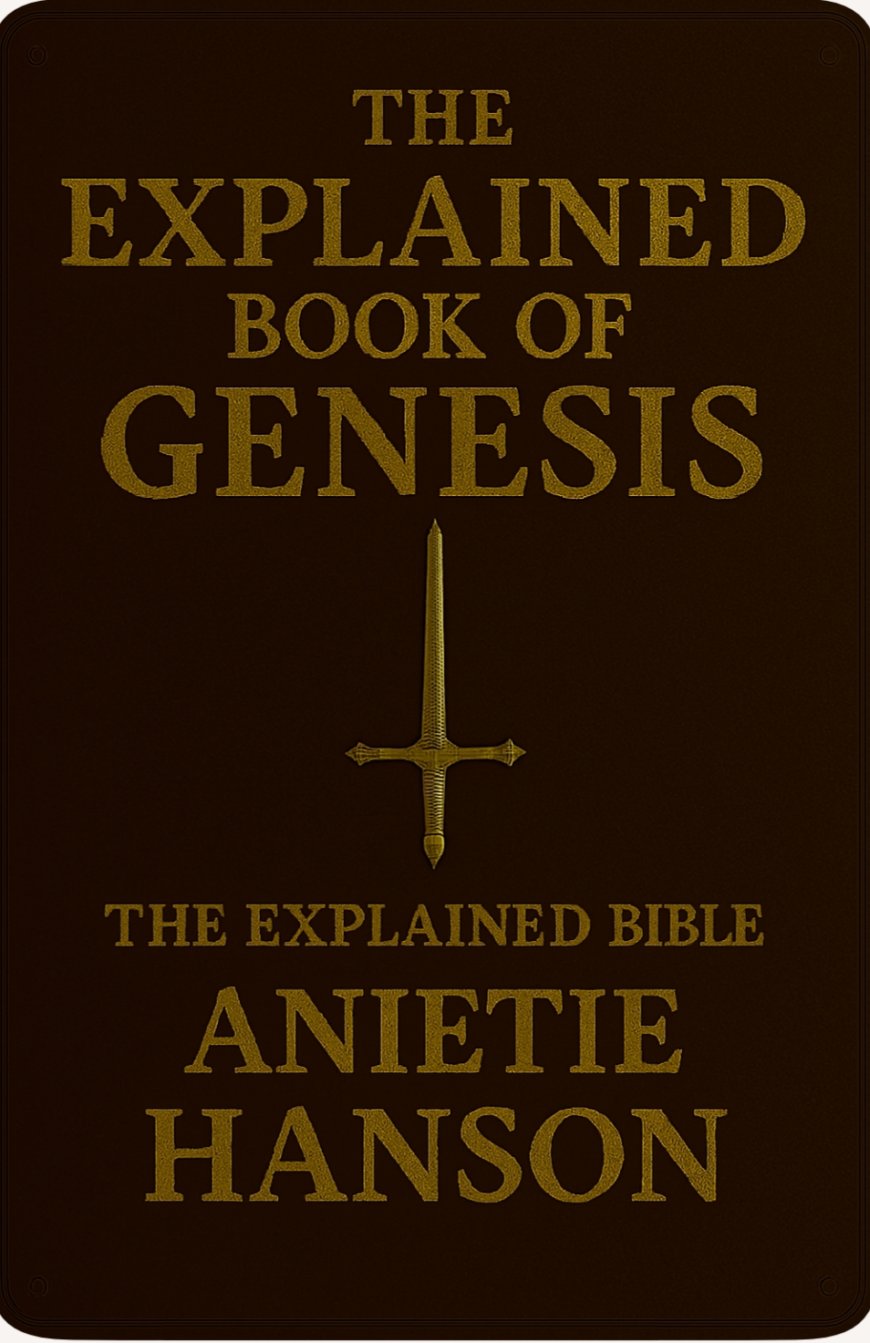
The Explained Book of Genesis Chapter 31 by Anietie Hanson
Introduction
Genesis Chapter 31 recounts a critical turning point in Jacob's life as he decides to leave Haran and return to Canaan, the land of promise. This chapter highlights themes of God’s guidance, divine protection, family dynamics, and the fulfillment of His covenant. Jacob navigates complex relationships with Laban, his uncle and father-in-law, who has repeatedly exploited him. Through divine intervention, Jacob escapes Laban’s control, reinforcing God’s promise to bless and protect him.
With 55 verses, this chapter shows Jacob’s journey toward spiritual maturity as he takes responsibility for his family and acknowledges God’s sovereignty. Let’s dive deep into the verses.
Verse-by-Verse Explanation
Genesis 31:1
"Jacob heard Laban’s sons’ words, saying, 'Jacob has taken away all that was our father’s. He has obtained all this wealth from that which was our father’s.'"
Explanation: The complaints of Laban’s sons reflect their jealousy of Jacob’s success. They perceive Jacob’s wealth as stolen, ignoring how God blessed him for his hard work and integrity. This accusation signals growing tension between Jacob and Laban’s household. Proverbs 14:30 reminds us: "A heart at peace gives life to the body, but envy rots the bones." The jealousy of Laban’s sons sets the stage for Jacob’s departure.
Genesis 31:2
"Jacob saw the expression on Laban’s face, and, behold, it was not toward him as before."
Explanation: Laban’s changed expression indicates his growing resentment toward Jacob, likely influenced by his sons’ accusations. This shift highlights how relationships can deteriorate when envy and greed take root. Proverbs 18:19 applies: "A brother wronged is more unyielding than a fortified city." The tension prompts Jacob to consider leaving.
Genesis 31:3
"God said to Jacob, 'Return to the land of your fathers, and to your relatives, and I will be with you.'"
Explanation: God’s command to return to the land of your fathers reaffirms His covenant with Abraham and Isaac, urging Jacob to fulfill his divine calling in Canaan. The promise—“I will be with you”—provides assurance of God’s guidance and protection. Isaiah 41:10 echoes this promise: "Do not fear, for I am with you." This moment marks a turning point as Jacob begins to trust fully in God’s plan.
Genesis 31:4–5
"Jacob sent and called Rachel and Leah to the field to his flock, and said to them, 'I see the expression on your father’s face, that it is not toward me as before; but the God of my father has been with me.'"
Explanation: By calling Rachel and Leah to the field, Jacob ensures privacy for a candid discussion about their departure. He contrasts Laban’s hostility with God’s faithfulness, emphasizing how God has been with him throughout the trials. Psalm 46:1 resonates: "God is our refuge and strength, an ever-present help in trouble." Jacob seeks his wives’ support for the journey ahead.
Genesis 31:6–7
"You know that I have served your father with all of my strength. Your father has deceived me and changed my wages ten times, but God didn’t allow him to hurt me."
Explanation: Jacob recounts Laban’s deceit, including altering his wages ten times, as a testament to God’s protection and justice. Despite Laban’s exploitation, God’s blessings have safeguarded Jacob’s prosperity. Deuteronomy 32:4 affirms: "He is the Rock, His works are perfect, and all His ways are just." Jacob’s faith in God’s provision strengthens his resolve.
Genesis 31:8–9
"If he said, ‘The speckled will be your wages,’ then all the flock bore speckled. If he said, ‘The streaked will be your wages,’ then all the flock bore streaked. Thus God has taken away your father’s livestock, and given them to me."
Explanation: Jacob attributes his success to God’s intervention, highlighting how God ensured justice by blessing him regardless of Laban’s changing conditions. The miraculous breeding of the flock demonstrates God’s control over nature. Psalm 75:7 reflects: "It is God who judges: He brings one down, He exalts another." Jacob acknowledges God as the source of his wealth.
Genesis 31:10–12
"During mating season I saw in a dream that the male goats which leaped on the flock were streaked, speckled, and grizzled. The angel of God said to me in the dream, 'Jacob,' and I said, 'Here I am.' He said, 'Now lift up your eyes, and behold, all the male goats which leap on the flock are streaked, speckled, and grizzled, for I have seen all that Laban does to you.'"
Explanation: Jacob’s dream reveals God’s active role in ensuring justice, showing how the flocks produced streaked and speckled offspring under divine direction. The angel of God underscores God’s intimate involvement in Jacob’s life, reminding him that He has seen Laban’s mistreatment. Job 34:21 confirms: "His eyes are on the ways of mortals; He sees their every step." This dream reassures Jacob of God’s oversight.
Genesis 31:13
"I am the God of Bethel, where you anointed a pillar, where you vowed a vow to Me. Now arise, get out from this land, and return to the land of your birth."
Explanation: God’s reminder—“I am the God of Bethel”—connects Jacob’s current situation to the divine encounter he had in Genesis 28, reaffirming His covenant and calling. The command to return to the land of your birth reflects the promise made to Abraham and Isaac to possess Canaan. Numbers 23:19 reinforces God’s faithfulness: "God is not human, that He should lie." This verse emphasizes how God’s promises endure throughout generations.
Genesis 31:14–15
"Rachel and Leah answered him, 'Is there yet any portion or inheritance for us in our father’s house? Aren’t we considered as foreigners by him? For he has sold us and has also entirely consumed our money.'"
Explanation: Rachel and Leah’s statement reflects their recognition of Laban’s exploitation, including the treatment of their dowry and inheritance. Their willingness to support Jacob’s departure underscores their loyalty to him as their husband and protector. Proverbs 3:5 resonates with their decision to leave: "Trust in the Lord with all your heart and lean not on your own understanding." This moment represents unity among Jacob’s family as they prepare to follow God’s guidance.
Genesis 31:16
"For all the riches which God has taken away from our father are ours and our children. Now then, do whatever God has said to you."
Explanation: Rachel and Leah acknowledge God’s justice in transferring wealth from Laban to Jacob. Their statement—“do whatever God has said to you”—reveals their trust in God’s plan and their willingness to follow Jacob. This demonstrates faith in divine provision despite uncertainties. Proverbs 16:9 reminds us: "In their hearts humans plan their course, but the Lord establishes their steps." The family aligns itself with God’s will as they prepare to leave Haran.
Genesis 31:17–18
"Then Jacob rose up, and set his sons and his wives on the camels, and he took away all his livestock, and all his possessions which he had gathered, including the livestock which he had gained in Paddan Aram, to go to Isaac his father, to the land of Canaan."
Explanation: Jacob’s decision to depart reflects his obedience to God’s command and his desire to return to Canaan, the land of promise. His preparation to take his family and possessions signifies his trust in God to protect them on their journey. Hebrews 11:8 captures the essence of faith in uncertain times: "By faith Abraham obeyed when he was called to go out to the place he would later receive as his inheritance." Jacob’s departure is guided by divine assurance.
Genesis 31:19
"Now Laban had gone to shear his sheep, and Rachel stole the household idols that were her father’s."
Explanation: Rachel’s decision to steal household idols introduces an element of intrigue and tension, as these idols represented both spiritual significance and property rights in ancient culture. Her actions may indicate her desire for independence or her rejection of Laban’s control. However, this act also foreshadows future complications. Exodus 20:3 warns: "You shall have no other gods before Me." Rachel’s actions contrast with Jacob’s reliance on God alone.
Genesis 31:20
"Jacob deceived Laban the Syrian, in that he didn’t tell him that he was leaving."
Explanation: Jacob’s deception in leaving without informing Laban reflects his fear of confrontation and Laban’s potential retaliation. While Jacob seeks to protect his family, his actions mirror earlier instances of deceit, showing the ongoing tension between human actions and divine plans. Proverbs 12:22 cautions: "The Lord detests lying lips, but He delights in people who are trustworthy." Jacob’s departure raises ethical questions, though it ultimately fulfills God’s will.
Genesis 31:21
"So he fled with all that he had. He rose up, passed over the River, and set his face toward the mountain of Gilead."
Explanation: Jacob’s crossing of the River and journey to the mountain of Gilead symbolize a transition from oppression to freedom and the pursuit of God’s promises. Gilead later becomes a place of healing and restoration (Jeremiah 8:22). Jacob’s determination to obey God’s command reflects his growing trust in divine guidance. Psalm 37:5 encourages reliance on God: "Commit your way to the Lord; trust in Him, and He will act." Jacob sets his sights on the land of promise.
Genesis 31:22
"Laban was told on the third day that Jacob had fled."
Explanation: The delay in Laban learning of Jacob’s departure—on the third day—underscores the physical distance Jacob had placed between himself and Laban. This symbolizes Jacob’s determination to escape Laban’s oppression. The third day often carries significance in the Bible, representing divine intervention and resolution (e.g., Jonah in the fish, Hosea 6:2). Jacob’s head start is crucial for his journey to Canaan, where God’s promises await fulfillment.
Genesis 31:23
"He took his relatives with him, and pursued him seven days’ journey. He overtook him in the mountain of Gilead."
Explanation: Laban’s pursuit of Jacob demonstrates his persistence and desire to reclaim what he views as his property—both his daughters and flocks. The seven days’ journey symbolizes completion and adds tension as Laban confronts Jacob in Gilead, a region associated with healing (Jeremiah 8:22). Psalm 34:7 reminds us of God’s protection: "The angel of the Lord encamps around those who fear Him, and He delivers them." Despite Laban’s pursuit, God watches over Jacob.
Genesis 31:24
"God came to Laban the Syrian in a dream by night, and said to him, 'Be careful that you don’t speak to Jacob either good or bad.'"
Explanation: God’s appearance to Laban in a dream demonstrates His active role in protecting Jacob and ensuring the fulfillment of His covenant. The warning—“don’t speak to Jacob either good or bad”—limits Laban’s ability to harm or manipulate Jacob. Job 33:15 highlights dreams as a means of divine communication: "In a dream, in a vision of the night, when deep sleep falls on people as they slumber in their beds." God ensures Jacob’s safety despite Laban’s intentions.
Genesis 31:25
"Laban came up with Jacob. Now Jacob had pitched his tent in the mountain, and Laban with his relatives encamped in the mountain of Gilead."
Explanation: The mountain of Gilead serves as a neutral meeting ground for Jacob and Laban, symbolizing a place of confrontation and eventual reconciliation. The physical separation of their camps reflects the emotional and relational distance between them. Psalm 18:2 provides strength in conflict: "The Lord is my rock, my fortress and my deliverer; my God is my rock, in whom I take refuge." Jacob prepares to defend his position while trusting in God’s protection.
Genesis 31:26–27
"Laban said to Jacob, 'What have you done, that you have deceived me, and carried away my daughters like captives of the sword? Why did you flee secretly, and deceive me, and didn’t tell me, that I might have sent you away with mirth and with songs, with tambourine and with harp?'"
Explanation: Laban’s accusation of deception reveals his manipulation, as he portrays himself as a victim despite his past exploitation of Jacob. His claim that he would have celebrated Jacob’s departure—“with mirth and songs”—rings hollow, given his history of dishonesty. Proverbs 26:25 warns of deceit: "Though their speech is charming, do not believe them." Laban’s words reflect his self-serving nature and inability to acknowledge Jacob’s grievances.
Genesis 31:28–29
"and didn’t allow me to kiss my sons and my daughters? Now you have done foolishly. It is in the power of my hand to hurt you, but the God of your father spoke to me last night, saying, ‘Be careful that you don’t speak to Jacob either good or bad.’"
Explanation: Laban’s claim of having the power to harm Jacob—“in the power of my hand”—highlights his frustration but also acknowledges God’s intervention through the dream. The reference to “the God of your father” reflects Laban’s recognition of Jacob’s divine protection, yet he remains reluctant to fully submit to God. Psalm 105:14–15 reaffirms divine protection: "Do not touch My anointed ones; do My prophets no harm." Laban is constrained by God’s authority.
Genesis 31:30
"Now you want to be gone, because you greatly longed for your father’s house, but why have you stolen my gods?"
Explanation: Laban’s accusation of theft—“why have you stolen my gods”—highlights the contrast between his reliance on idols and Jacob’s trust in the one true God. The idols symbolize Laban’s spiritual blindness and attachment to material wealth. Isaiah 44:9 critiques idolatry: "All who make idols are nothing, and the things they treasure are worthless." This accusation introduces tension, as Rachel’s theft of the idols complicates Jacob’s defense.
Genesis 31:31
"Jacob answered Laban, 'Because I was afraid, for I said, "Lest you should take your daughters from me by force."'"
Explanation: Jacob’s admission—“I was afraid”—highlights his vulnerability and fear of losing his family. This response reflects the distrust that has grown between him and Laban over years of exploitation. Despite this fear, Jacob’s decision to leave aligns with God’s command to return to Canaan. Psalm 56:3 resonates with Jacob’s mindset: "When I am afraid, I put my trust in You." Jacob balances human emotions with faith in God’s protection.
Genesis 31:32
"Anyone you find your gods with shall not live. Before our relatives, discern what is yours with me, and take it.” For Jacob didn’t know that Rachel had stolen them."
Explanation: Jacob’s bold declaration—“Anyone you find your gods with shall not live”—shows his confidence in his innocence, yet it unknowingly places Rachel in danger. This moment underscores the potential consequences of hidden sins and deception within families. Proverbs 28:13 warns: "Whoever conceals their sins does not prosper, but the one who confesses and renounces them finds mercy." The hidden idols create tension and foreshadow further complications.
Genesis 31:33–34
"Laban went into Jacob’s tent, into Leah’s tent, and into the tent of the two female servants; but he didn’t find them. He went out of Leah’s tent, and entered into Rachel’s tent. Now Rachel had taken the household idols, put them in the camel’s saddle, and sat on them. Laban felt around all the tent, but didn’t find them."
Explanation: Rachel’s clever concealment of the idols—placing them in the camel’s saddle and sitting on them—reveals her resourcefulness but also her continued attachment to the material and spiritual relics of her father’s household. This act symbolizes the tension between the old life Rachel leaves behind and the covenantal future she is part of with Jacob. Exodus 20:3–4 warns against idolatry: "You shall have no other gods before Me." Rachel’s actions reflect the lingering influence of Laban’s household.
Genesis 31:35
"She said to her father, 'Don’t be angry, my lord, that I can’t rise up before you; for I am having my period.' He searched, but didn’t find the household idols."
Explanation: Rachel’s explanation—“I am having my period”—leverages cultural taboos surrounding menstruation to prevent Laban from searching further. Her deception not only protects her but also highlights the lengths she is willing to go to maintain control over the idols. This moment underscores the complexity of human relationships and the hidden struggles of faith versus tradition. Proverbs 14:12 warns: "There is a way that appears to be right, but in the end it leads to death." Rachel’s actions reflect a lack of full reliance on God.
Genesis 31:36–37
"Jacob was angry, and argued with Laban. Jacob answered Laban, 'What is my trespass? What is my sin, that you have hotly pursued me? Now that you have felt around in all my stuff, what have you found of all your household stuff? Set it here before my relatives and your relatives, that they may judge between us two!'"
Explanation: Jacob’s frustration—“What is my trespass? What is my sin?”—reflects his indignation at being wrongly accused and pursued. His challenge to Laban to produce evidence highlights his integrity and the contrast between his righteous conduct and Laban’s deceitful behavior. Psalm 26:2–3 aligns with Jacob’s defense: "Test me, Lord, and try me, examine my heart and my mind; for I have always been mindful of Your unfailing love." This confrontation gives Jacob an opportunity to assert his faithfulness.
Genesis 31:38–39
"These twenty years I have been with you. Your ewes and your female goats have not cast their young. I haven’t eaten the rams of your flocks. That which was torn of animals, I didn’t bring to you. I bore its loss. Of my hand you required it, whether stolen by day or stolen by night."
Explanation: Jacob recounts his twenty years of faithful service to Laban, emphasizing his diligence and integrity as a shepherd. His willingness to bear losses rather than shift blame underscores his ethical character, contrasting with Laban’s greed and dishonesty. Colossians 3:23 resonates: "Whatever you do, work at it with all your heart, as working for the Lord, not for human masters." Jacob’s conduct reflects his trust in God’s provision rather than human schemes.
Genesis 31:40–41
"This was my situation: in the day the drought consumed me, and the frost by night; and my sleep fled from my eyes. These twenty years I have been in your house. I served you fourteen years for your two daughters, and six years for your flock, and you have changed my wages ten times."
Explanation: Jacob’s description of his hardships—“drought by day, frost by night”—reveals the physical and emotional toll of serving Laban. His reference to the fourteen years for Rachel and Leah and the six years for flocks emphasizes the depth of his commitment despite Laban’s exploitation. Galatians 6:9 encourages perseverance: "Let us not become weary in doing good, for at the proper time we will reap a harvest." Jacob’s endurance reflects his faith in God’s ultimate justice.
Genesis 31:42
"Unless the God of my father, the God of Abraham, and the fear of Isaac, had been with me, surely now you would have sent me away empty. God has seen my affliction and the labor of my hands, and rebuked you last night."
Explanation: Jacob’s declaration—“the God of Abraham, and the fear of Isaac”—emphasizes his trust in the covenantal God, who has protected and blessed him despite Laban’s exploitation. The phrase “fear of Isaac” reflects reverence for God’s authority and His role in Isaac’s life. Jacob attributes his survival and success to God’s intervention, particularly through His rebuke of Laban in the dream. Psalm 34:17 reinforces this: "The righteous cry out, and the Lord hears them; He delivers them from all their troubles." This verse highlights God’s justice and care for Jacob.
Genesis 31:43
"Laban answered Jacob, 'The daughters are my daughters, the children are my children, and the flocks are my flocks. All that you see is mine. What can I do today to these my daughters, or to their children whom they have borne?'"
Explanation: Laban’s response—“All that you see is mine”—reveals his possessiveness and reluctance to accept Jacob’s rightful claim to his family and flocks. Despite his declaration, he ultimately acknowledges his inability to harm Jacob, demonstrating the limitations placed on him by God’s rebuke. Proverbs 21:30 applies here: "There is no wisdom, no insight, no plan that can succeed against the Lord." Laban’s pride contrasts with God’s sovereignty in transferring blessings to Jacob.
Genesis 31:44
"Now come, let us make a covenant, you and I. Let it be for a witness between me and you."
Explanation: Laban’s proposal to establish a covenant represents a formal resolution to the conflict, ensuring peace and mutual respect moving forward. The covenant serves as a witness to God’s oversight and justice in preserving Jacob’s family and wealth. Ecclesiastes 5:5 reminds: "It is better not to make a vow than to make one and not fulfill it." This covenant reflects the binding nature of agreements in ancient culture.
Genesis 31:45–46
"Jacob took a stone, and set it up for a pillar. Jacob said to his relatives, 'Gather stones.' They took stones, and made a heap. They ate there by the heap."
Explanation: The pillar and heap of stones symbolize the covenant as a physical and visible reminder of the agreement between Jacob and Laban. The act of eating together signifies fellowship and commitment to uphold the terms of peace. This ritual mirrors Jacob’s earlier use of a pillar at Bethel (Genesis 28:18) to commemorate his encounter with God. Joshua 24:27 affirms the significance of physical reminders: "This stone will be a witness against us." The heap serves as a testament to God’s justice.
Genesis 31:47–48
"Laban called it Jegar Sahadutha, but Jacob called it Galeed. Laban said, 'This heap is a witness between me and you today.' Therefore it was named Galeed."
Explanation: The naming of the heap as Galeed (meaning “witness heap”) and Jegar Sahadutha reflects the agreement’s importance in both languages and cultures. This dual naming emphasizes the unity achieved despite past conflicts. Isaiah 2:4 envisions such reconciliation: "They will beat their swords into plowshares and their spears into pruning hooks." The heap symbolizes peace and accountability.
Genesis 31:49
"and Mizpah, for he said, 'May God watch between me and you, when we are absent from one another.'"
Explanation: Mizpah, meaning “watchtower,” highlights the invocation of God’s presence as a witness to the covenant. Laban’s statement underscores the belief that God will oversee and judge both parties even in their absence. Psalm 121:8 resonates: "The Lord will watch over your coming and going both now and forevermore." Mizpah symbolizes trust in divine oversight and justice.
Genesis 31:50
"If you afflict my daughters, or if you take wives besides my daughters, no man is with us. Behold, God is witness between me and you.'"
Explanation: Laban’s warning—“God is witness between me and you”—invokes divine accountability to ensure Jacob’s fair treatment of Rachel and Leah. This declaration underscores the sacredness of the covenant and the responsibility to uphold it. Proverbs 15:3 emphasizes: "The eyes of the Lord are everywhere, keeping watch on the wicked and the good." The warning binds both parties to ethical behavior.
Genesis 31:51–53
"Laban said to Jacob, 'See this heap, and see the pillar, which I have set between me and you. May this heap be a witness, and the pillar be a witness, that I will not pass over this heap to you, and that you will not pass over this heap and this pillar to me, for harm. May the God of Abraham, and the God of Nahor, the God of their father, judge between us.' Jacob swore by the fear of his father Isaac."
Explanation: The heap and pillar serve as boundaries to prevent conflict, symbolizing the mutual agreement to peace. The invocation of the God of Abraham reflects the covenantal foundation of justice and accountability. Jacob’s oath by the fear of Isaac highlights the reverence for God’s role in his life. Hebrews 6:16 speaks to the solemnity of oaths: "People swear by someone greater than themselves, and the oath confirms what is said and puts an end to all argument." This covenant ensures lasting peace.
Genesis 31:54–55
"Jacob offered a sacrifice in the mountain, and called his relatives to eat bread. They ate bread, and stayed all night in the mountain. Early in the morning, Laban rose up, kissed his sons and his daughters, and blessed them. Laban departed and returned to his place."
Explanation: Jacob’s sacrifice signifies worship and gratitude for God’s protection during the confrontation. The sharing of bread reflects fellowship and closure. Laban’s departure—“returning to his place”—marks the end of their strained relationship, symbolizing reconciliation and new beginnings. Psalm 118:24 reflects the sense of peace: "This is the day the Lord has made; let us rejoice and be glad in it." The covenant leaves Jacob free to pursue his divine calling.
Questions and Answers on Genesis Chapter 31
1. Why did Laban’s sons envy Jacob in Genesis 31:1?
o They perceived Jacob’s wealth as stolen, ignoring God’s blessings (Proverbs 14:30).
2. How did God protect Jacob in Genesis 31:3?
o God reassured him of His presence and guided him to return to Canaan (Isaiah 41:10).
3. Why did Jacob call Rachel and Leah to the field in Genesis 31:4?
o To discuss their departure in private, ensuring unity and support (Psalm 46:1).
4. What does Jacob’s dream in Genesis 31:10–12 signify?
o It reveals God’s active intervention and justice in blessing Jacob (Job 34:21).
5. Why did Rachel steal the household idols in Genesis 31:19?
o Likely to assert independence or retain family property rights, though it reflected spiritual conflict (Exodus 20:3).
6. How did God protect Jacob during Laban’s pursuit in Genesis 31:24?
o He warned Laban in a dream not to harm Jacob, demonstrating divine sovereignty (Psalm 105:14–15).
7. What is the significance of the heap of stones in Genesis 31:45–46?
o It serves as a physical witness to the covenant of peace and reconciliation (Joshua 24:27).
8. Why was Mizpah named in Genesis 31:49?
o It symbolizes God’s watchful presence over the covenant and their actions (Psalm 121:8).
9. What does Laban’s oath by the God of Abraham in Genesis 31:53 signify?
o It acknowledges divine accountability in maintaining peace (Hebrews 6:16).
10. Why did Jacob offer a sacrifice in Genesis 31:54?
o To worship God and express gratitude for His guidance and protection (Psalm 118:24).
11. What caused the tension between Jacob and Laban throughout Genesis Chapter 31?
o Laban’s greed, exploitation, and manipulation contrasted with Jacob’s integrity and God’s blessings (Proverbs 12:22).
12. What overarching theme does Genesis Chapter 31 convey?
o It highlights God’s protection, justice, and guidance amid human conflict and challenges (Psalm 34:17).
o
Final Thoughts
Genesis Chapter 31 is a narrative of transition, showcasing Jacob’s journey from servitude to independence under God’s guidance. With 55 verses, this chapter highlights key theological insights, including God’s sovereignty, faithfulness, and role as a protector. It reminds us that even in the face of exploitation and conflict, God’s plans prevail.
What's Your Reaction?
 Like
0
Like
0
 Dislike
0
Dislike
0
 Love
0
Love
0
 Funny
0
Funny
0
 Angry
0
Angry
0
 Sad
0
Sad
0
 Wow
0
Wow
0