












Genesis Chapter 33
Genesis Chapter 33
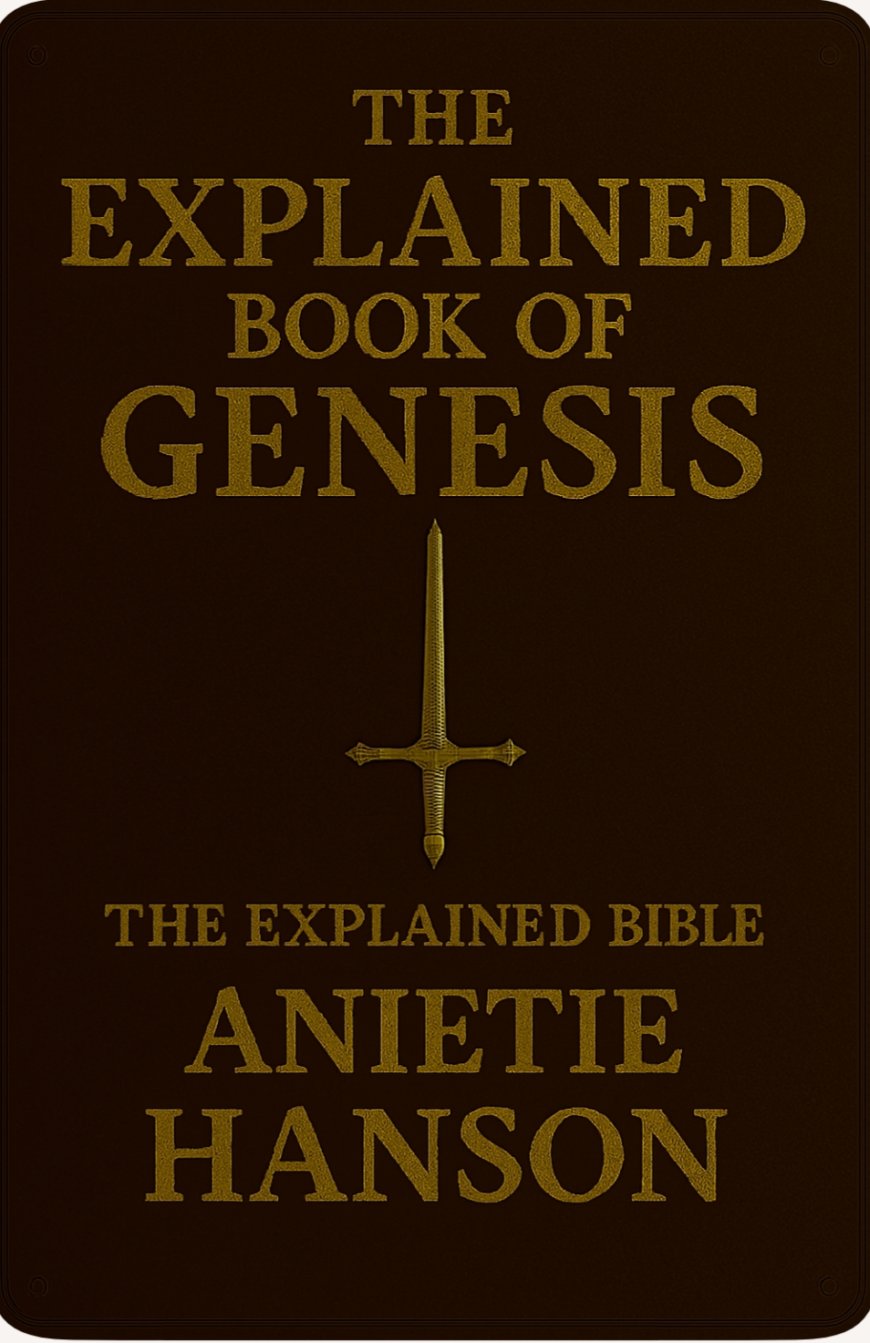
The Explained Book of Genesis Chapter 33 by Anietie Hanson
Introduction
Genesis Chapter 33 captures a beautiful moment of reconciliation between Jacob and Esau, demonstrating the transformative power of humility, forgiveness, and divine intervention. After years of estrangement following Jacob's deception over the birthright (Genesis 27), Jacob faces Esau with trepidation, fearing hostility. Yet, Esau surprises him with acceptance and love. This chapter highlights themes of reconciliation, humility, and God’s overarching providence.
With 20 verses, Genesis Chapter 33 carries profound lessons about healing broken relationships, trusting God, and living in unity. Let’s deeply explore the verses and their meanings.
Verse-by-Verse Explanation
Genesis 33:1
"Jacob lifted up his eyes, and looked, and behold, Esau was coming, and with him four hundred men. He divided the children among Leah, Rachel, and the two servants."
Explanation: Jacob’s lifting up his eyes symbolizes the anticipation and vulnerability of facing Esau, who appears formidable with four hundred men, evoking fear from the previous chapter (Genesis 32:6). Jacob’s division of his family reflects his attempt to shield them in the event of hostility. Psalm 121:1 underscores trust in God despite fear: "I lift up my eyes to the hills—where does my help come from?" Jacob seeks protection but ultimately relies on God’s providence.
Genesis 33:2
"He put the servants and their children in front, Leah and her children after, and Rachel and Joseph at the rear."
Explanation: The arrangement of Jacob’s family reflects his protective instincts, placing Rachel and Joseph, his favored ones, at the rear for greater safety. This favoritism foreshadows the conflict among Jacob’s sons, particularly Joseph’s brothers’ jealousy (Genesis 37:4). Romans 2:11 emphasizes impartiality: "For God does not show favoritism." Jacob’s human prioritization contrasts with divine justice.
Genesis 33:3
"He himself passed over in front of them, and bowed himself to the ground seven times, until he came near to his brother."
Explanation: Jacob’s act of bowing seven times demonstrates humility and submission, a stark contrast to his earlier deception. The number seven represents completeness, symbolizing his sincere desire for reconciliation. Proverbs 22:4 reflects this posture: "Humility is the fear of the Lord; its wages are riches and honor and life." Jacob leads by example, prioritizing peace over pride.
Genesis 33:4
"Esau ran to meet him, embraced him, fell on his neck, kissed him, and they wept."
Explanation: Esau’s actions—running, embracing, kissing, and weeping—reflect genuine forgiveness and love, dissolving years of tension. This reunion mirrors the parable of the prodigal son in Luke 15:20: "But while he was still a long way off, his father saw him and was filled with compassion for him; he ran to his son, threw his arms around him and kissed him." Esau’s unexpected warmth illustrates the power of reconciliation and grace.
Genesis 33:5
"He lifted up his eyes, and saw the women and the children, and said, 'Who are these with you?' He said, 'The children whom God has graciously given your servant.'"
Explanation: Jacob’s response—“The children whom God has graciously given”—acknowledges God as the source of blessings, demonstrating humility and gratitude. Esau’s inquiry about Jacob’s family reflects curiosity and a desire to reconnect. Psalm 127:3 affirms: "Children are a heritage from the Lord, offspring a reward from Him." Jacob attributes his prosperity to divine favor rather than personal effort.
Genesis 33:6–7
"Then the servants came near with their children, and they bowed themselves. Leah also and her children came near, and bowed themselves. After them, Joseph came near with Rachel, and they bowed themselves."
Explanation: The act of bowing by each group reflects collective humility and respect for Esau, affirming Jacob’s leadership in promoting reconciliation. This scene underscores unity within Jacob’s household as they seek peace. Philippians 2:3 encourages humility: "Do nothing out of selfish ambition or vain conceit. Rather, in humility value others above yourselves." Their gestures reinforce the sincerity of their approach.
Genesis 33:8
"Esau said, 'What do you mean by all this company which I met?' Jacob said, 'To find favor in the sight of my lord.'"
Explanation: Esau’s inquiry about the company (Jacob's gifts) reflects his confusion about the grand gesture, while Jacob’s response—“To find favor in the sight of my lord”—expresses humility and submission. The phrase emphasizes Jacob's desire to repair their relationship. Proverbs 21:14 highlights the power of gifts: "A gift in secret pacifies anger, and a reward in the bosom strong wrath." Jacob’s words show his sincerity in seeking peace.
Genesis 33:9
"Esau said, 'I have enough, my brother; let that which you have be yours.'"
Explanation: Esau’s refusal—“I have enough”—demonstrates his contentment and dismisses any suspicion of greed. This contrasts with the earlier rivalry over inheritance (Genesis 27:41) and highlights Esau’s graciousness. 1 Timothy 6:6 affirms the value of contentment: "But godliness with contentment is great gain." Esau’s response signifies genuine reconciliation, emphasizing that peace outweighs material wealth.
Genesis 33:10
"Jacob said, 'Please, no, if I have now found favor in your sight, then receive my present at my hand, because I have seen your face as one sees the face of God, and you were pleased with me.'"
Explanation: Jacob’s statement—“I have seen your face as one sees the face of God”—reveals his deep relief and gratitude for Esau’s forgiveness, viewing it as a reflection of divine grace. This encounter echoes Jacob’s earlier wrestling with God at Peniel, where he experienced divine favor (Genesis 32:30). Matthew 5:9 resonates with this moment: "Blessed are the peacemakers, for they will be called children of God." Jacob’s words express his joy in reconciliation.
Genesis 33:11
"Please take the gift that I brought to you, because God has dealt graciously with me, and because I have enough." He urged him, and he took it."
Explanation: Jacob insists that Esau accept his gift, emphasizing God’s grace and provision—“because I have enough.” This gesture not only reflects Jacob’s gratitude but also solidifies their reconciliation. Esau’s eventual acceptance symbolizes the mutual restoration of their relationship. Acts 20:35 reminds us: "It is more blessed to give than to receive." This exchange demonstrates both humility and joy.
Genesis 33:12
"Esau said, 'Let’s take our journey, and let’s go, and I will go before you.'"
Explanation: Esau’s invitation—“Let’s take our journey”—shows his willingness to accompany and guide Jacob, symbolizing unity and trust. His offer to go before you reflects his protective instincts as an older brother, marking a shift from conflict to camaraderie. Psalm 133:1 celebrates such unity: "How good and pleasant it is when God’s people live together in unity!" This moment underscores the bond restored between the brothers.
Genesis 33:13–14
"Jacob said to him, 'My lord knows that the children are tender, and that the flocks and herds with me have their young. If they overdrive them one day, all the flocks will die. Please let my lord pass over before his servant, and I will lead on gently, according to the pace of the livestock that are before me and according to the pace of the children, until I come to my lord to Seir.'"
Explanation: Jacob gently declines Esau’s offer to travel together, citing the needs of the children and flocks. His reasoning reflects his newfound sense of responsibility and consideration for his family. The phrase “I will lead on gently” symbolizes Jacob’s careful leadership and spiritual growth. Proverbs 27:23 encourages stewardship: "Be diligent to know the state of your flocks, and look well to your herds." Jacob prioritizes the well-being of his household.
Genesis 33:15
"Esau said, 'Let me now leave with you some of the people who are with me.' He said, 'Why? Let me find favor in the sight of my lord.'"
Explanation: Esau’s offer to leave some of his men with Jacob reflects his concern and generosity, but Jacob humbly declines, showing his independence and trust in God’s protection. The phrase “Let me find favor in the sight of my lord” reiterates Jacob’s desire to maintain goodwill. Philippians 4:19 underscores reliance on God: "My God will meet all your needs according to the riches of His glory in Christ Jesus." Jacob trusts in divine guidance for the journey ahead.
Genesis 33:16
"So Esau returned that day on his way to Seir."
Explanation: Esau’s departure to Seir signifies the peaceful resolution of their conflict, as both brothers part ways in mutual understanding. The mention of Seir, Esau’s territory, fulfills earlier prophecies about Esau’s descendants (Genesis 27:39–40). Deuteronomy 2:5 later acknowledges Esau’s inheritance: "I have given Mount Seir to Esau as his possession." This separation underscores their distinct paths while maintaining reconciliation.
Genesis 33:17
"Jacob traveled to Succoth, built himself a house, and made shelters for his livestock. Therefore the name of the place is called Succoth."
Explanation: Jacob’s arrival at Succoth, meaning “shelters” or “booths,” highlights his temporary settlement and care for his family and livestock. This marks a transition as Jacob establishes stability after years of wandering. The building of a house reflects his growing responsibility and a step toward fulfilling God’s promises in Canaan. Psalm 127:1 emphasizes God’s role in security: "Unless the Lord builds the house, the builders labor in vain." Succoth signifies rest and preparation for future endeavors.
Genesis 33:18
"Jacob came in peace to the city of Shechem, which is in the land of Canaan, when he came from Paddan Aram, and encamped before the city."
Explanation: Jacob’s arrival in Shechem signifies his return to Canaan, the land promised to Abraham, Isaac, and his descendants (Genesis 12:7). The phrase “came in peace” reflects the resolution of past conflicts and God’s faithfulness in bringing Jacob safely home. John 14:27 connects this peace to divine assurance: "Peace I leave with you; My peace I give you." Jacob’s peaceful arrival marks a fulfillment of God’s covenant.
Genesis 33:19
"He bought the parcel of ground where he had spread his tent, at the hand of the children of Hamor, Shechem’s father, for one hundred pieces of money."
Explanation: Jacob’s purchase of land demonstrates his intent to settle in Canaan, establishing a tangible claim in the Promised Land. The mention of Hamor and Shechem introduces figures pivotal to future events in Genesis 34. This purchase reflects Abraham’s earlier acquisition of land for Sarah’s burial (Genesis 23:16), symbolizing the continuity of God’s promises. Hebrews 11:9 highlights faith in the Promised Land: "By faith he made his home in the promised land like a stranger in a foreign country."
Genesis 33:20
"He erected an altar there, and called it El Elohe Israel."
Explanation: Jacob’s construction of an altar named El Elohe Israel (meaning “God, the God of Israel”) signifies his spiritual growth and recognition of God’s sovereignty. The naming reflects Jacob’s acceptance of his new identity as Israel, forged in his wrestling encounter with God (Genesis 32:28). Exodus 20:24 underscores the significance of altars in worship: "Make an altar of earth for Me and sacrifice on it your burnt offerings and fellowship offerings." The altar symbolizes Jacob’s covenant relationship with God and his commitment to worship Him.
12 Questions and Answers on Genesis Chapter 33
1. Why was Jacob afraid to meet Esau in Genesis 33:1?
o Jacob feared Esau’s possible retaliation over the birthright deception, especially upon seeing Esau’s four hundred men (Genesis 27:41).
2. What does Jacob bowing seven times in Genesis 33:3 represent?
o It symbolizes humility, submission, and a sincere desire for reconciliation (Proverbs 22:4).
3. How does Esau’s response in Genesis 33:4 display forgiveness?
o Esau’s embrace, kiss, and weeping demonstrate genuine grace and reconciliation, mirroring divine forgiveness (Luke 15:20).
4. Why does Jacob refer to his children as a gift from God in Genesis 33:5?
o He acknowledges God’s sovereignty and blessings in his life (Psalm 127:3).
5. Why did Esau refuse Jacob’s gift in Genesis 33:9?
o Esau expressed contentment with his possessions, emphasizing his lack of material need (1 Timothy 6:6).
6. What does Jacob mean by saying Esau’s face is like seeing the face of God in Genesis 33:10?
o He perceives Esau’s forgiveness as a reflection of God’s grace and favor (Genesis 32:30).
7. Why does Jacob insist on giving the gift in Genesis 33:11?
o It signifies Jacob’s gratitude and desire to solidify their reconciliation (Acts 20:35).
8. Why does Jacob decline to travel with Esau in Genesis 33:13–14?
o Jacob prioritizes the safety and well-being of his family and livestock (Proverbs 27:23).
9. What is the significance of Succoth in Genesis 33:17?
o Succoth symbolizes rest and preparation for Jacob’s continued journey (Psalm 127:1).
10. Why did Jacob buy land in Shechem in Genesis 33:19?
o The purchase establishes Jacob’s intent to settle in Canaan, fulfilling God’s promises (Hebrews 11:9).
11. What does the altar named El Elohe Israel in Genesis 33:20 signify?
o It reflects Jacob’s recognition of God as his covenantal deity and affirms his new identity as Israel (Exodus 20:24).
12. What overarching theme does Genesis Chapter 33 convey?
o The chapter illustrates reconciliation, humility, and the fulfillment of God’s promises (Romans 12:18).
Final Thoughts
Genesis Chapter 33, with 20 verses, beautifully demonstrates the power of forgiveness, humility, and divine guidance in restoring relationships. Esau’s forgiveness and Jacob’s humility reflect God’s transformative work in their lives. The chapter also emphasizes Jacob’s transition into his covenantal identity as Israel and his steps toward settling in the Promised Land.
Key Themes:
1. Reconciliation: The reunion of Jacob and Esau reveals the healing power of grace and forgiveness.
2. Humility and Gratitude: Jacob’s actions highlight the importance of humility and recognizing God’s blessings.
3. God’s Faithfulness: Jacob’s safe return to Canaan underscores God’s unwavering commitment to His promises.
4. Worship and Identity: The construction of the altar reflects Jacob’s spiritual growth and his acknowledgment of God as the God of Israel.
What's Your Reaction?
 Like
0
Like
0
 Dislike
0
Dislike
0
 Love
0
Love
0
 Funny
0
Funny
0
 Angry
0
Angry
0
 Sad
0
Sad
0
 Wow
0
Wow
0