







Genesis Chapter 38
Genesis Chapter 38
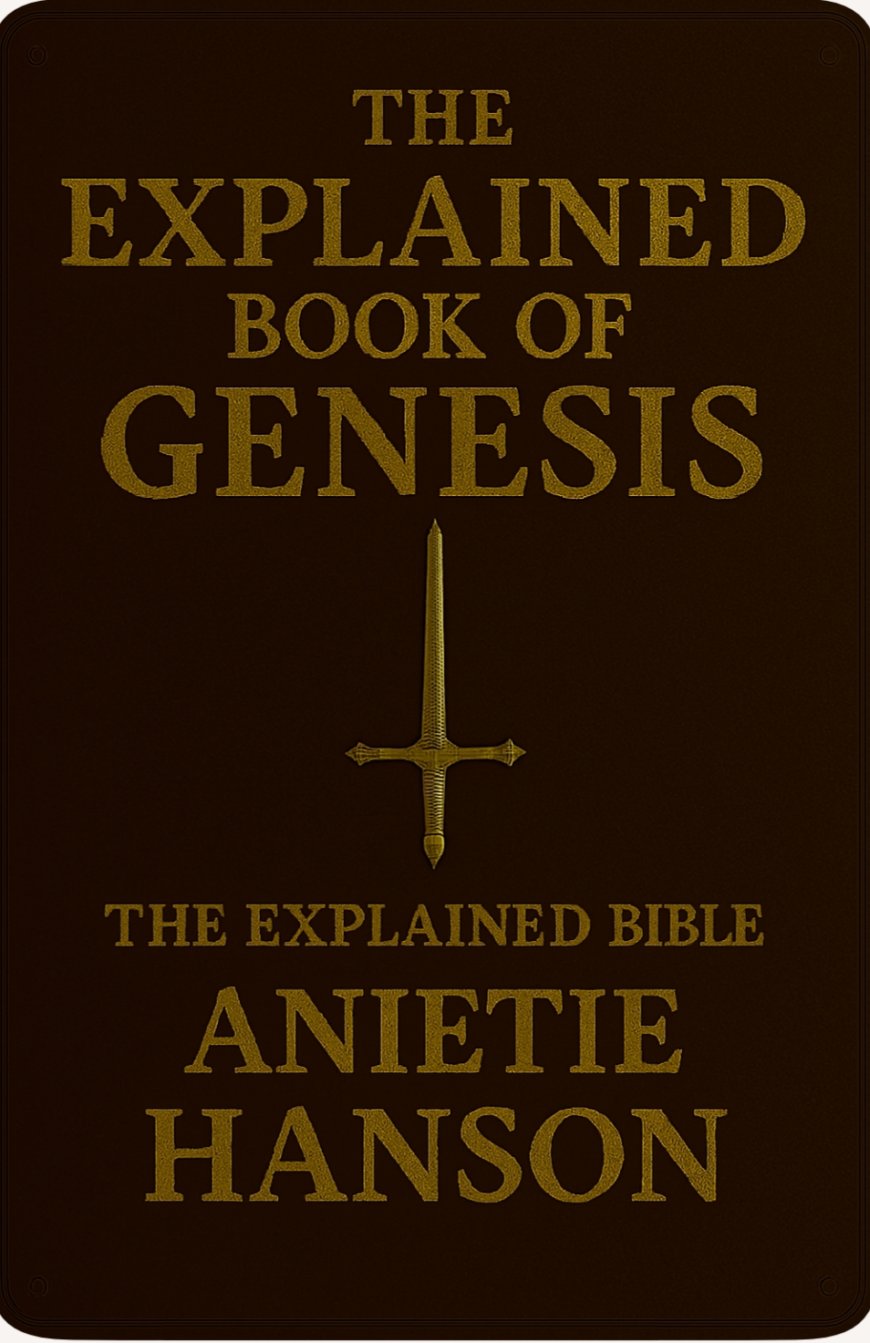
The Explained Book of Genesis Chapter 38 by Anietie Hanson
Introduction
Genesis Chapter 38 pauses the Joseph narrative to recount a critical episode involving Judah and Tamar, an unexpected story that shapes the lineage of the Messiah. This chapter explores themes of repentance, redemption, justice, and the complexities of human relationships. Despite the morally ambiguous actions of the characters, God’s sovereign plan prevails, weaving grace into a story that ultimately contributes to the genealogy of Jesus Christ.
With 30 verses, Genesis Chapter 38 highlights human frailty and divine providence, showing how God uses imperfect circumstances to fulfill His promises. Let’s examine each verse thoroughly, drawing connections to other Scriptures using the World English Bible (WEB) exclusively.
Verse-by-Verse Explanation
Genesis 38:1
"At that time, Judah went down from his brothers, and visited a certain Adullamite, whose name was Hirah."
Explanation: Judah’s departure from his brothers signals a turning point, as he distances himself from the family and the covenant promises associated with Jacob. The Adullamite Hirah becomes a companion, reflecting Judah’s integration into Canaanite society. Adullam is later associated with David (1 Samuel 22:1), symbolizing refuge and transformation. Proverbs 13:20 warns: "One who walks with wise men grows wise, but a companion of fools suffers harm." This verse sets the stage for Judah’s moral decline and eventual redemption.
Genesis 38:2–3
"There, Judah saw the daughter of a certain Canaanite man named Shua. He took her, and went in to her. She conceived, and bore a son, and he named him Er. She conceived again, and bore a son, and she named him Onan. She yet again bore a son, and named him Shelah. He was at Chezib when she bore him."
Explanation: Judah’s marriage to a Canaanite woman, Shua’s daughter, highlights his departure from the covenantal traditions, as intermarriage with Canaanites was discouraged (Genesis 24:3). The sons—Er, Onan, and Shelah—form Judah’s immediate lineage but introduce complications. Chezib, mentioned here, means “deceptive,” foreshadowing the challenges ahead. Ezra 9:12 emphasizes the need for separation from foreign practices: "Don’t give your daughters to their sons." This verse highlights Judah’s flawed choices and their impact on his family.
Genesis 38:6–7
"Judah took a wife for Er, his firstborn, and her name was Tamar. Er, Judah’s firstborn, was wicked in God’s sight; and God killed him."
Explanation: Tamar, chosen as Er’s wife, becomes central to the story. Er’s wickedness reflects the consequences of moral failure and divine justice, as God killed him for his actions. Though the nature of his wickedness is unspecified, it underscores the seriousness of sin. Proverbs 10:27 warns: "The fear of God prolongs days, but the years of the wicked shall be shortened." Er’s death marks the beginning of Tamar’s challenges within Judah’s family.
Genesis 38:8–9
"Judah said to Onan, 'Go in to your brother’s wife, and perform the duty of a brother-in-law to her, and raise up offspring for your brother.' Onan knew that the offspring wouldn’t be his, and when he went in to his brother’s wife, he spilled his semen on the ground, lest he should give offspring to his brother."
Explanation: Judah instructs Onan to fulfill the levirate marriage duty (Deuteronomy 25:5–6), ensuring Er’s lineage continues through Tamar. Onan’s deliberate refusal—spilling his semen on the ground—displays selfishness and disrespect for the covenantal responsibility. God’s design for family lineage reflects continuity and legacy. 1 Corinthians 13:5 reminds: "Love doesn’t seek its own." Onan’s actions contrast with the sacrificial love expected in fulfilling divine commands.
Genesis 38:10
"What he did was wicked in God’s sight, and He killed him also."
Explanation: Onan’s wickedness, like Er’s, incurs divine judgment, emphasizing accountability and the seriousness of disobedience. God’s swift action highlights His commitment to justice and the sanctity of His covenant promises. Romans 6:23 reflects this principle: "The wages of sin is death." Tamar’s position becomes increasingly precarious, as she remains childless despite the levirate marriage tradition.
Genesis 38:11
"Then Judah said to Tamar, his daughter-in-law, 'Remain a widow in your father’s house until Shelah, my son, is grown up,' for he said, 'Lest he also die, like his brothers.' Tamar went and lived in her father’s house."
Explanation: Judah’s instruction to Tamar—“remain a widow”—appears to promise her marriage to his youngest son, Shelah, when he comes of age. However, Judah’s underlying fear—“lest he also die”—shows his mistrust in Tamar, believing she may be connected to the deaths of Er and Onan. By sending Tamar back to her father’s house, Judah places her in a precarious position, denying her rightful place in his household. Proverbs 3:5 reminds us of God’s wisdom: "Trust in God with all your heart, and don’t lean on your own understanding." Judah’s decision reveals his struggle to reconcile his fear with his obligations.
Genesis 38:12
"After many days, Shua’s daughter, the wife of Judah, died. Judah was comforted, and went up to his sheep shearers to Timnah, he and his friend Hirah the Adullamite."
Explanation: The death of Judah’s wife, Shua’s daughter, marks another turning point, leaving Judah a widower. His visit to the sheep shearers in Timnah reflects the agricultural context of the story, where shearing was a time of festivity and social gathering. The presence of Hirah, Judah’s Canaanite friend, indicates his continued engagement with non-covenantal influences. Ecclesiastes 3:1 reminds us: "There is a time for everything, and a season for every activity under the heavens." This verse sets the stage for Judah’s interaction with Tamar.
Genesis 38:13–14
"Tamar was told, 'Behold, your father-in-law is going up to Timnah to shear his sheep.' She took off her widow’s garments, and covered herself with a veil, and wrapped herself, and sat in the gate of Enaim, which is on the way to Timnah; for she saw that Shelah was grown up, and she wasn’t given to him as a wife."
Explanation: Tamar’s actions—removing her widow’s garments and disguising herself—reflect her bold decision to confront Judah’s failure to honor his promise. By sitting at the gate of Enaim, Tamar positions herself strategically, knowing Judah will pass by. The veil symbolizes anonymity and hints at Tamar’s resourcefulness in reclaiming her rights within Judah’s family. Proverbs 31:8 encourages boldness: "Speak up for those who can’t speak for themselves." Tamar’s initiative displays determination to secure justice and fulfillment of the levirate duty.
Genesis 38:15–16
"When Judah saw her, he thought that she was a prostitute, for she had covered her face. He turned to her by the way, and said, 'Please come, let me come in to you,' for he didn’t know that she was his daughter-in-law. She said, 'What will you give me, that you may come in to me?'"
Explanation: Judah’s misjudgment—assuming Tamar to be a prostitute—reflects the moral decline caused by his separation from the covenantal family. His proposition and Tamar’s response highlight her calculated plan to hold Judah accountable. Tamar’s question—“What will you give me?”—introduces the exchange that will secure evidence of Judah’s involvement. Ezekiel 18:30 warns: "Repent and turn yourselves from all your transgressions." Judah’s moral lapse contrasts with Tamar’s determination to uphold justice.
Genesis 38:17–18
"He said, 'I will send you a young goat from the flock.' She said, 'Will you give me a pledge, until you send it?' He said, 'What pledge will I give you?' She said, 'Your signet and your cord, and your staff that is in your hand.' He gave them to her, and came in to her, and she conceived by him."
Explanation: Judah’s promise of a young goat underscores his intent to pay Tamar for the encounter, while Tamar’s demand for his signet, cord, and staff reflects her strategic foresight in obtaining proof of their interaction. The signet represents Judah’s identity and authority, the cord may symbolize his rank, and the staff indicates leadership. Tamar’s conception by Judah highlights the fulfillment of the levirate obligation, despite the unconventional circumstances. Genesis 50:20 reminds us of God’s redemptive power: "You meant evil against me, but God meant it for good."
Genesis 38:19
"She arose, and went away, and took off her veil, and put on the garments of her widowhood."
Explanation: After her encounter with Judah, Tamar discreetly resumes her identity as a widow, maintaining appearances and protecting her plan’s secrecy. Her actions highlight her wisdom and determination to fulfill her rightful role in Judah’s family. Proverbs 14:15 affirms the value of prudence: "A prudent man carefully considers his ways." Tamar’s strategic discretion ensures that evidence of her encounter remains intact while safeguarding her reputation.
Genesis 38:20–21
"Judah sent the young goat by the hand of his friend, the Adullamite, to receive the pledge from the woman’s hand; but he didn’t find her. Then he asked the men of her place, saying, 'Where is the prostitute who was at Enaim by the road?' They said, 'There has been no prostitute here.'"
Explanation: Judah’s attempt to fulfill his promise with the young goat, through his friend Hirah, demonstrates his transactional mindset. However, the absence of the supposed prostitute and the townspeople’s denial underscores Tamar’s calculated anonymity. Judah’s reliance on Hirah, a Canaanite, reflects his compromised moral and spiritual judgment. Psalm 37:12 reminds us: "The wicked plots against the just and gnashes at him with his teeth." This moment sets the stage for Judah’s eventual reckoning.
Genesis 38:22–23
"He returned to Judah, and said, 'I haven’t found her. The men of the place also said, "There has been no prostitute here."' Judah said, 'Let her keep it, lest we be shamed. Behold, I sent this young goat, and you haven’t found her.'"
Explanation: Judah’s response—“let her keep it, lest we be shamed”—reveals his concern for his reputation rather than the morality of his actions. By abandoning his pledge, Judah unwittingly ensures that Tamar retains the evidence needed to expose the truth. Proverbs 28:13 teaches: "He who conceals his sins doesn’t prosper, but whoever confesses and renounces them finds mercy." Judah’s avoidance of accountability contrasts with the justice soon to unfold.
Genesis 38:24
"About three months later, Judah was told, 'Tamar, your daughter-in-law, has played the prostitute. Moreover, she is with child by prostitution.' Judah said, 'Bring her out, and let her be burned!'”
Explanation: Judah’s harsh judgment—“let her be burned”—demonstrates both hypocrisy and a double standard, as he condemns Tamar for actions similar to his own. His quickness to punish reflects societal attitudes toward women, particularly widows, in ancient times. Matthew 7:5 challenges such hypocrisy: "First remove the beam out of your own eye, and then you can see clearly to remove the speck out of your brother’s eye." Judah’s outrage contrasts with the justice about to be revealed.
Genesis 38:25–26
"When she was brought out, she sent to her father-in-law, saying, 'By the man whose these are, I am with child.' She also said, 'Please discern whose these are—the signet, and the cords, and the staff.' Judah acknowledged them, and said, 'She is more righteous than I, because I didn’t give her to Shelah, my son.' He knew her again no more."
Explanation: Tamar’s revelation of Judah’s signet, cord, and staff exposes his hypocrisy and compels him to acknowledge her righteousness. Judah’s admission—“she is more righteous than I”—marks a turning point in his character, as he recognizes his failure to fulfill his obligations. Tamar’s actions ensure justice and preserve her place in Judah’s family. This moment foreshadows Judah’s eventual role as a leader among his brothers (Genesis 49:10). Micah 6:8 calls for repentance: "What does God require of you but to act justly, love mercy, and walk humbly with your God?" Judah’s transformation begins here.
Genesis 38:27–30
"In the time of her travail, behold, twins were in her womb. When she travailed, one put out a hand, and the midwife took and tied a scarlet thread on his hand, saying, 'This came out first.' As he drew back his hand, behold, his brother came out, and she said, 'Why have you made a breach for yourself?' Therefore his name was called Perez. Afterward his brother came out, who had the scarlet thread on his hand, and his name was called Zerah."
Explanation: The birth of twins, Perez and Zerah, carries profound symbolic and prophetic significance. Perez (meaning “breach”) represents breakthrough and is listed in the genealogy of Jesus Christ (Matthew 1:3), symbolizing God’s ability to work through unconventional circumstances. Zerah (meaning “brightness”), identified by the scarlet thread, symbolizes hope and redemption. The interplay between the twins reflects themes of reversal and divine choice, as seen throughout Scripture. Psalm 113:7–8 echoes Perez’s rise: "He raises up the poor out of the dust and lifts up the needy from the ash heap." God’s sovereign plan triumphs through unexpected means.
Questions and Answers on Genesis Chapter 38
1. Why did Judah separate from his brothers in Genesis 38:1?
o Judah’s departure reflects a distancing from his family’s covenantal responsibilities and a drift into Canaanite society.
2. What does Tamar’s role in the story signify?
o Tamar’s actions highlight her courage and determination to secure justice and preserve the family lineage.
3. Why did God judge Er and Onan in Genesis 38:7 and 38:10?
o Their wickedness and refusal to fulfill covenantal obligations warranted divine judgment, reflecting the seriousness of sin.
4. What is the significance of Judah’s signet, cord, and staff in Genesis 38:18?
o These items symbolize Judah’s identity and authority, providing Tamar with the evidence needed to expose the truth.
5. How does Judah’s reaction to Tamar’s pregnancy reflect hypocrisy?
o Judah condemned Tamar for supposed immorality while ignoring his own culpability in their encounter.
6. What transformation does Judah undergo in this chapter?
o Judah moves from hypocrisy and irresponsibility to acknowledgment of his failures and recognition of Tamar’s righteousness.
7. Why is the birth of Perez and Zerah significant in Genesis 38:27–30?
o Perez’s lineage leads to King David and ultimately Jesus Christ, emphasizing God’s redemptive plan through unexpected means.
8. What does the scarlet thread on Zerah’s hand symbolize?
o The scarlet thread represents recognition, hope, and a reminder of divine providence in the midst of human complexity.
9. How does Genesis 38 highlight God’s sovereignty?
o Despite human sin and failure, God orchestrates events to fulfill His purposes, including the preservation of Judah’s lineage.
10. What lessons can be drawn from Tamar’s actions?
o Tamar’s perseverance and courage demonstrate the importance of seeking justice and trusting God’s providence.
11. How does Judah’s relationship with Tamar foreshadow his leadership role?
o Judah’s recognition of his failures prepares him for his eventual rise as a leader among his brothers (Genesis 49:10).
12. How does Genesis 38 connect to the broader story of redemption?
o The chapter contributes to the Messianic lineage, showing how God works through imperfect circumstances to achieve His purposes.
Final Thoughts
Genesis Chapter 38, with 30 verses, presents a complex narrative of sin, justice, and redemption. While Judah’s actions reveal human failure, Tamar’s boldness and God’s providential guidance ensure the preservation of the Messianic lineage. This chapter underscores the transformative power of repentance and the fulfillment of God’s promises, even through flawed individuals.
Key Themes:
1. Human Failure and Divine Providence: God works through human imperfection to fulfill His redemptive plan.
2. Justice and Righteousness: Tamar’s actions highlight the pursuit of justice within a flawed system.
3. Messianic Lineage: The birth of Perez connects this story to the genealogy of Jesus Christ, demonstrating God’s faithfulness.
What's Your Reaction?
 Like
0
Like
0
 Dislike
0
Dislike
0
 Love
0
Love
0
 Funny
0
Funny
0
 Angry
0
Angry
0
 Sad
0
Sad
0
 Wow
0
Wow
0