












Genesis Chapter 34
Genesis Chapter 34
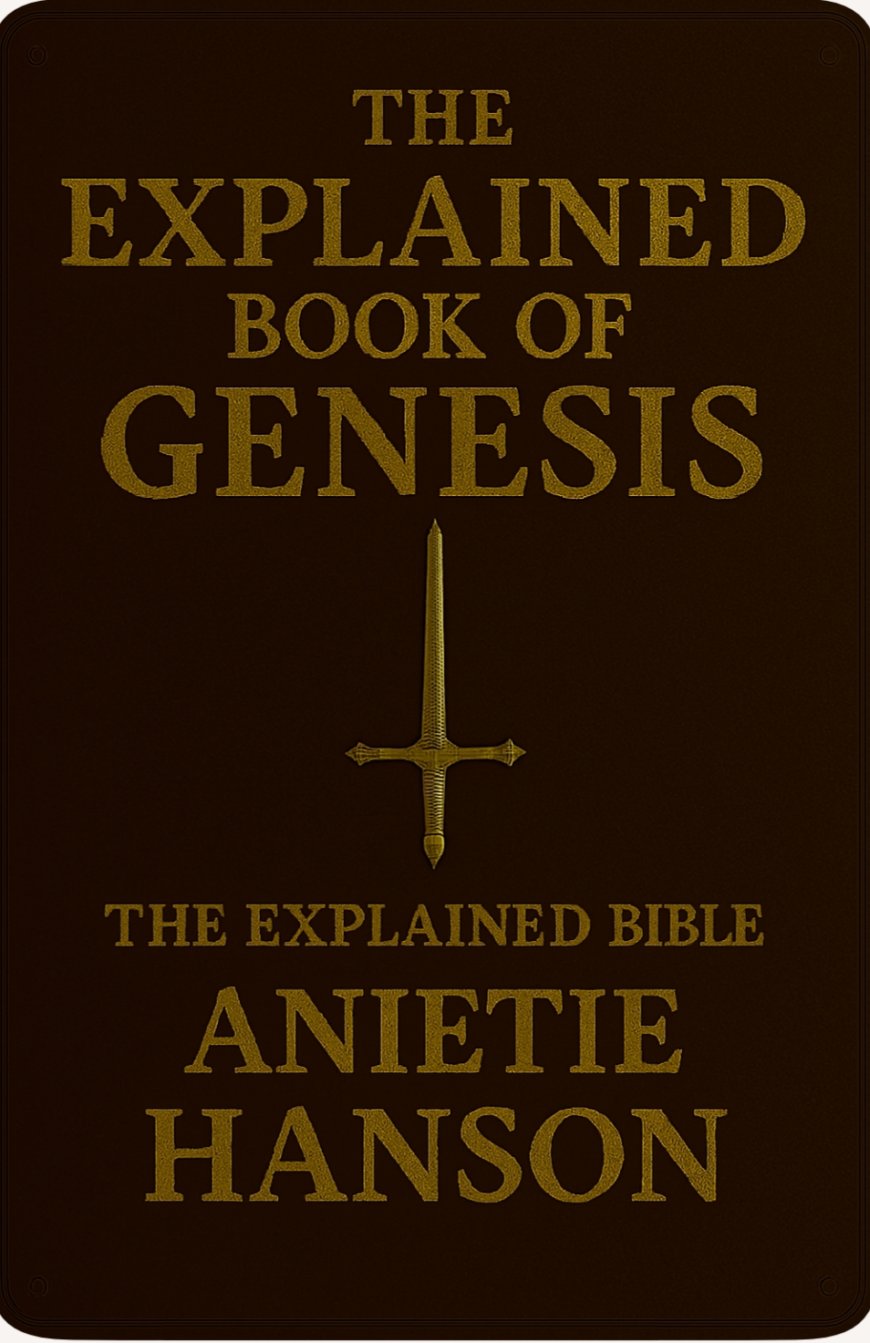
The Explained Book of Genesis Chapter 34 by Anietie Hanson
Study Bible: Genesis Chapter 34 – The Story of Dinah and the Events in Shechem
Introduction
Genesis Chapter 34 details the tragic story of Dinah, Jacob’s daughter, and the violent aftermath that unfolds in Shechem. This chapter explores themes of honor, defilement, vengeance, and the tension between justice and human retaliation. It provides insight into cultural values, familial responsibilities, and the consequences of actions driven by anger and deception. While this chapter does not explicitly reference God's direct intervention, it underscores the moral complexity of human decisions.
With 31 verses, Genesis Chapter 34 is both a somber and pivotal narrative, highlighting the need for discernment and wisdom in times of crisis. Let’s examine each verse and its deeper meanings.
Verse-by-Verse Explanation
Genesis 34:1
"Dinah, the daughter of Leah, whom she bore to Jacob, went out to see the daughters of the land."
Explanation: Dinah’s decision to see the daughters of the land reflects her desire for social interaction, possibly seeking companionship outside of her family. Her association with Leah highlights a maternal link, emphasizing her distinct place in Jacob’s family. The phrase symbolizes curiosity but foreshadows vulnerability in an unfamiliar environment. Proverbs 22:3 warns: "The prudent see danger and take refuge, but the simple keep going and pay the penalty." Dinah’s choices lead to unintended consequences.
Genesis 34:2
"Shechem the son of Hamor the Hivite, the prince of the land, saw her. He took her, lay with her, and defiled her."
Explanation: Shechem, as the prince of the land, represents power and privilege, but his actions—taking, laying with, and defiling Dinah—show abuse of authority. The term defiled signifies both physical and emotional violation, leaving Dinah dishonored. This act highlights the cultural and moral tensions regarding consent and purity. Exodus 22:16 emphasizes accountability: "If a man seduces a virgin who is not pledged to be married, he must pay the bride-price." Shechem’s conduct sets the stage for conflict.
Genesis 34:3
"His soul clung to Dinah, the daughter of Jacob, and he loved the young lady, and spoke kindly to the young lady."
Explanation: Shechem’s clinging to Dinah and his expressions of love and kindness reflect his remorse and desire to marry her, though his actions initially violated her dignity. This highlights the complexity of Shechem’s character, balancing affection with wrongdoing. 1 Corinthians 13:4 reminds us of the qualities of true love: "Love is patient, love is kind." Despite Shechem’s emotions, the damage caused by his initial sin cannot be overlooked.
Genesis 34:4
"Shechem spoke to his father, Hamor, saying, 'Get me this young lady as a wife.'"
Explanation: Shechem’s plea to Hamor reflects urgency and determination, but it also underscores patriarchal norms where fathers negotiated marriages. This request intensifies the tension between Jacob’s family and the people of Shechem. Proverbs 11:2 warns against arrogance: "When pride comes, then comes disgrace, but with humility comes wisdom." Shechem’s approach highlights entitlement rather than humility.
Genesis 34:5
"Now Jacob heard that he had defiled Dinah, his daughter; and his sons were with his livestock in the field. Jacob held his peace until they came."
Explanation: Jacob’s initial reaction—holding his peace—demonstrates restraint and deliberation, possibly awaiting his sons to address the violation collectively. This silence contrasts with later actions driven by anger and revenge. Ecclesiastes 3:7 acknowledges timing: "A time to be silent and a time to speak." Jacob’s pause reflects prudence, yet his silence also hints at uncertainty.
Genesis 34:6
"Hamor the father of Shechem went out to Jacob to talk with him."
Explanation: Hamor’s approach to Jacob reflects the gravity of the situation and an attempt to negotiate peace through marriage. As the father of Shechem, Hamor plays a mediating role, showcasing cultural norms of resolving disputes. Matthew 5:9 encourages peace: "Blessed are the peacemakers, for they will be called children of God." Hamor’s intentions may be pragmatic, but the underlying tension remains unresolved.
Genesis 34:7
"The sons of Jacob came from the field when they heard it. The men were grieved, and they were very angry, because he had done folly in Israel in lying with Jacob’s daughter; a thing which ought not to be done."
Explanation: The sons of Jacob display grief and intense anger, emphasizing the cultural and familial significance of Dinah’s defilement. The term “folly in Israel” points to the moral and societal breach caused by Shechem’s act. This outrage reflects the value placed on family honor and purity. Deuteronomy 22:21 categorizes such acts as disgraceful, deserving severe consequences: "You must purge the evil from among you." The brothers’ reaction sets the stage for their drastic actions.
Genesis 34:8–9
"Hamor talked with them, saying, 'The soul of my son Shechem longs for your daughter. Please give her to him as a wife. Make marriages with us. Give your daughters to us, and take our daughters for yourselves.'"
Explanation: Hamor’s proposal of intermarriage aims to forge alliances between Jacob’s family and the people of Shechem. While this offer may seem practical from a cultural standpoint, it raises questions about blending with those outside God’s covenant. The mention of “make marriages” reflects the potential compromise of spiritual and cultural distinctiveness. Deuteronomy 7:3–4 warns against intermarriage with non-covenant peoples, as it may lead to turning away from God: "Do not intermarry with them... for they will turn your children away from following Me." Hamor’s solution overlooks the gravity of Shechem’s sin.
Genesis 34:10–11
"You shall dwell with us, and the land will be before you. Live and trade in it, and get possessions in it.” Shechem said to her father and to her brothers, 'Let me find favor in your eyes, and whatever you will tell me I will give.'"
Explanation: Hamor offers material incentives, including access to land and trade, to appease Jacob’s family and secure Dinah as Shechem’s wife. Shechem’s plea—“whatever you will tell me I will give”—reflects his desperation and willingness to make amends. However, these offers focus on material gains rather than addressing the moral violation. Proverbs 16:8 contrasts such attempts: "Better a little with righteousness than much gain with injustice." This negotiation shows the priorities of Shechem’s household but fails to resolve the underlying dishonor.
Genesis 34:12
"Ask me a great amount for a dowry, and I will give whatever you ask of me. But give me the young lady as a wife."
Explanation: Shechem’s readiness to pay an exorbitant dowry reflects his desire to legitimize his relationship with Dinah and restore honor through societal norms. While dowries were customary, this offer cannot erase the wrong done. Exodus 22:16–17 references such payments but emphasizes that they do not absolve guilt: "He must pay the bride-price, and she shall be his wife." Shechem’s proposal underscores his determination but fails to grasp the emotional and moral weight of his actions.
Genesis 34:13
"The sons of Jacob answered Shechem and Hamor his father with deceit, and spoke, because he had defiled Dinah their sister."
Explanation: The sons of Jacob, driven by anger and a sense of justice, respond with deceit, indicating a premeditated plan to exact vengeance. Their use of dishonesty contrasts with God’s expectations for truthfulness, as outlined in Proverbs 12:22: "The Lord detests lying lips, but He delights in people who are trustworthy." While their anger is understandable, their method reveals the danger of allowing emotions to dictate actions.
Genesis 34:14
"They said to them, 'We can’t do this thing, to give our sister to one who is uncircumcised; for that would be a reproach to us.'"
Explanation: The sons of Jacob invoke circumcision, a sacred covenantal sign given to Abraham and his descendants (Genesis 17:10–11), as a condition for Dinah’s marriage to Shechem. Their statement—“that would be a reproach to us”—underscores their view of circumcision as a marker of cultural and spiritual identity. While this condition appears religiously motivated, it is deceptively proposed as part of their plan for vengeance. Romans 2:28–29 highlights the true significance of circumcision: "A person is not a Jew who is one only outwardly... circumcision is circumcision of the heart." The brothers’ use of this sacred act for deceitful purposes illustrates their moral compromise.
Genesis 34:15–16
"Only on this condition will we consent to you: if you will be as we are, that every male of you be circumcised. Then we will give our daughters to you, and we will take your daughters to us, and we will dwell with you, and we will become one people."
Explanation: The proposal of circumcision for all males appears to offer unity and coexistence, creating the impression of reconciliation. The promise—“we will become one people”—is a manipulative assurance, as the brothers have no intention of fulfilling it. This verse reflects the tension between true covenantal practices and their misuse. Proverbs 12:20 speaks to the contrast between intentions: "Deceit is in the heart of those who plot evil, but those who promote peace have joy." The sons’ duplicity distorts a holy practice for personal revenge.
Genesis 34:17–18
"But if you will not listen to us, and be circumcised, then we will take our sister, and we will be gone.” Their words pleased Hamor and Shechem, Hamor’s son."
Explanation: The ultimatum—“then we will take our sister, and we will be gone”—places pressure on Hamor and Shechem, while their pleasure at the proposal reveals their desperation to secure Dinah’s marriage. This exchange highlights how manipulation can exploit vulnerability and eagerness. Psalm 36:3 warns about deceitful speech: "The words of their mouths are wicked and deceitful; they fail to act wisely or do good." The satisfaction of Hamor and Shechem blinds them to the brothers’ true intentions.
Genesis 34:19
"The young man didn’t wait to do this thing, because he had delight in Jacob’s daughter, and he was honored above all the house of his father."
Explanation: Shechem’s eagerness to comply with the circumcision requirement underscores his emotional attachment to Dinah and his willingness to make significant sacrifices. His status as “honored above all the house of his father” reflects his influence and leadership within Shechem. Ecclesiastes 7:9 offers a cautionary insight: "Do not be quickly provoked in your spirit, for anger resides in the lap of fools." Shechem’s haste contrasts with the careful contemplation required for such significant decisions.
Genesis 34:20–21
"Hamor and Shechem, his son, came to the gate of their city, and talked with the men of their city, saying, 'These men are peaceful with us. Therefore let them live in the land and trade in it; for behold, the land is large enough for them. Let us take their daughters to us for wives, and let us give them our daughters.'"
Explanation: The gate of the city, often a place for public discourse and decision-making, serves as the setting for Hamor and Shechem’s appeal to the men of Shechem. Their portrayal of Jacob’s family as “peaceful” is misleading, as the brothers’ intentions are far from peaceful. The emphasis on trade and intermarriage reflects a focus on material prosperity rather than spiritual discernment. Proverbs 14:12 warns of misguided plans: "There is a way that appears to be right, but in the end it leads to death." Hamor and Shechem’s persuasion will lead their city to disaster.
Genesis 34:22
"Only on this condition will the men consent to us: to be circumcised, as they are circumcised."
Explanation: The men of Shechem agree to circumcision as a condition for unity and intermarriage, believing it will lead to shared prosperity. Their willingness reflects their trust in Hamor and Shechem’s leadership, yet this decision is based on deception. The focus on outward compliance without true spiritual understanding echoes Romans 2:29: "Circumcision is circumcision of the heart, by the Spirit, not by the written code." This shallow acceptance foreshadows disastrous consequences.
Genesis 34:23
"Won’t their livestock and their possessions and all their animals be ours? Only let us give our consent to them, and they will dwell with us."
Explanation: Hamor and Shechem’s persuasion appeals to material gain, envisioning the acquisition of Jacob’s wealth through union. This emphasis on economic advantage over moral principles reflects misplaced priorities. Proverbs 28:22 warns: "The stingy are eager to get rich and are unaware that poverty awaits them." Their greed blinds them to the true nature of the agreement.
Genesis 34:24
"All who went out of the gate of his city listened to Hamor and to Shechem his son, and every male was circumcised, all who went out of the gate of his city."
Explanation: The unanimous agreement to undergo circumcision demonstrates the influence and authority of Hamor and Shechem. This act symbolizes compliance, yet it is exploited by Jacob’s sons for their vengeful scheme. Psalm 64:5 reflects the misuse of trust for destructive purposes: "They encourage each other in evil plans; they talk about hiding their snares." The act of circumcision becomes a deceptive tool rather than a sacred symbol.
Genesis 34:25
"On the third day, when they were sore, two of Jacob’s sons, Simeon and Levi, Dinah’s brothers, each took his sword, came upon the unsuspecting city, and killed all the males."
Explanation: The third day, when the men were weakened from circumcision, serves as the calculated moment for Simeon and Levi’s violent attack. Their action—killing all the males—demonstrates unchecked vengeance, disregarding justice and proportionality. Matthew 26:52 warns against such violence: "For all who draw the sword will die by the sword." Simeon and Levi’s rage consumes them, resulting in devastation.
Genesis 34:26
"They killed Hamor and Shechem, his son, with the edge of the sword, and took Dinah out of Shechem’s house, and went away."
Explanation: The targeting of Hamor and Shechem, along with the rescue of Dinah, reflects Simeon and Levi’s singular focus on avenging their sister’s honor. While their actions liberate Dinah, their brutality overshadows the righteousness of protecting her. Romans 12:19 counsels restraint: "Do not take revenge, my dear friends, but leave room for God’s wrath." The brothers’ unchecked anger leads to widespread destruction.
Genesis 34:27
"Jacob’s sons came on the dead, and plundered the city, because they had defiled their sister."
Explanation: The plundering of the city extends the vengeance of Jacob’s sons beyond punishment, turning their outrage into a complete exploitation of Shechem. Their actions—fueled by Dinah’s defilement—result in disproportionate retaliation, which contrasts with the principles of justice and mercy upheld by God. Proverbs 21:7 underscores this imbalance: "The violence of the wicked will sweep them away, because they refuse to do what is just." The scope of destruction reveals how unchecked anger can escalate.
Genesis 34:28–29
"They took their flocks, their herds, their donkeys, that which was in the city, that which was in the field, and all their wealth. They took captive all their little ones and their wives, and took as plunder everything that was in the house."
Explanation: By taking everything of value, including the city’s women and children, Jacob’s sons go beyond avenging their sister, committing acts of greed and cruelty. This mirrors the consequences of acting impulsively, allowing emotions to overshadow moral responsibility. Matthew 7:12 provides the ethical standard they ignore: "So in everything, do to others what you would have them do to you." Their actions perpetuate a cycle of suffering and loss.
Genesis 34:30
"Jacob said to Simeon and Levi, 'You have troubled me, to make me odious to the inhabitants of the land, among the Canaanites and the Perizzites. I, being few in number, they will gather themselves together against me and strike me, and I will be destroyed, I and my household.'"
Explanation: Jacob reprimands Simeon and Levi, not for their vengeful actions, but for the potential consequences on their family’s survival. His concern—“you have troubled me”—focuses on the political and social fallout, as their small group risks annihilation by neighboring tribes. Proverbs 15:1 contrasts Jacob’s complaint: "A gentle answer turns away wrath, but a harsh word stirs up anger." Jacob’s fear for his household highlights the consequences of their disproportionate response.
Genesis 34:31
"They said, 'Should he deal with our sister as with a prostitute?'"
Explanation: Simeon and Levi’s defense of their actions—“Should he deal with our sister as with a prostitute?”—reveals their sense of righteous indignation and familial loyalty. They justify their violence by pointing to the dishonor brought upon Dinah. However, their excessive retribution contrasts with God’s standard of justice and mercy. James 1:20 reminds: "Human anger does not produce the righteousness that God desires." Their statement underscores the tension between justice and vengeance.
12 Relevant Questions and Answers on Genesis Chapter 34
1. Why did Dinah go out to see the daughters of the land in Genesis 34:1?
o Dinah sought companionship and social interaction, reflecting youthful curiosity but exposing herself to unfamiliar dangers (Proverbs 22:3).
2. What was Shechem’s offense in Genesis 34:2?
o Shechem defiled Dinah by taking and lying with her without consent, violating her dignity and family honor (Exodus 22:16).
3. What does the term “folly in Israel” signify in Genesis 34:7?
o It indicates a moral and cultural disgrace, emphasizing the gravity of Shechem’s act within Jacob’s covenantal family (Deuteronomy 22:21).
4. Why did Hamor propose intermarriage in Genesis 34:8–9?
o Hamor sought to resolve the conflict through alliances, offering economic and social integration (Proverbs 11:2).
5. What role does deceit play in Genesis 34:13?
o Jacob’s sons used circumcision deceitfully to exploit their enemies’ vulnerability, leading to violent retaliation (Proverbs 12:20).
6. Why did all the men of Shechem agree to circumcision in Genesis 34:24?
o They trusted Hamor and Shechem’s leadership, believing it would bring economic benefits and unity with Jacob’s family (Psalm 64:5).
7. What motivated Simeon and Levi’s actions in Genesis 34:25?
o Their anger and desire to avenge Dinah’s defilement drove them to kill all the males in Shechem (James 1:20).
8. How did Jacob respond to the violence in Genesis 34:30?
o Jacob reprimanded Simeon and Levi for jeopardizing the safety of their family by making them targets for neighboring tribes (Proverbs 15:1).
9. What consequences did Jacob’s sons face for their actions in Shechem?
o Their actions drew condemnation from Jacob and created future tensions, reflecting the long-term impact of impulsive violence (Genesis 49:5–7).
10. What was the spiritual significance of circumcision in Genesis 34?
o Circumcision, a sacred covenantal sign, was misused by Jacob’s sons as a tool for deception rather than its intended spiritual purpose (Romans 2:29).
11. How does Genesis 34 illustrate the dangers of unchecked anger?
o Simeon and Levi’s excessive retaliation led to destruction and endangered their family, emphasizing the need for restraint (Matthew 26:52).
12. What overarching themes emerge from Genesis Chapter 34?
o The chapter explores the complexities of justice, vengeance, and the consequences of moral compromise (Romans 12:19).
Final Thoughts
Genesis Chapter 34, with 31 verses, provides a sobering narrative of defilement, deception, and disproportionate vengeance. While God’s presence is not explicitly mentioned, the chapter raises critical moral and spiritual questions about the consequences of actions driven by anger, dishonor, and cultural norms.
Key Themes:
1. Family Honor and Justice: The story highlights the importance of protecting family dignity while examining the cost of retaliation.
2. Moral Compromise: The misuse of circumcision and excessive vengeance demonstrate the dangers of distorting sacred practices for personal agendas.
3. Consequences of Violence: Simeon and Levi’s actions jeopardize their family’s safety and draw Jacob’s condemnation.
4. Cultural and Spiritual Tensions: The narrative reveals the challenges of navigating relationships with those outside God’s covenant.
What's Your Reaction?
 Like
0
Like
0
 Dislike
0
Dislike
0
 Love
0
Love
0
 Funny
0
Funny
0
 Angry
0
Angry
0
 Sad
0
Sad
0
 Wow
0
Wow
0