














The Explained Book of Proverbs Chapter 14
The Explained Book of Proverbs Chapter 14
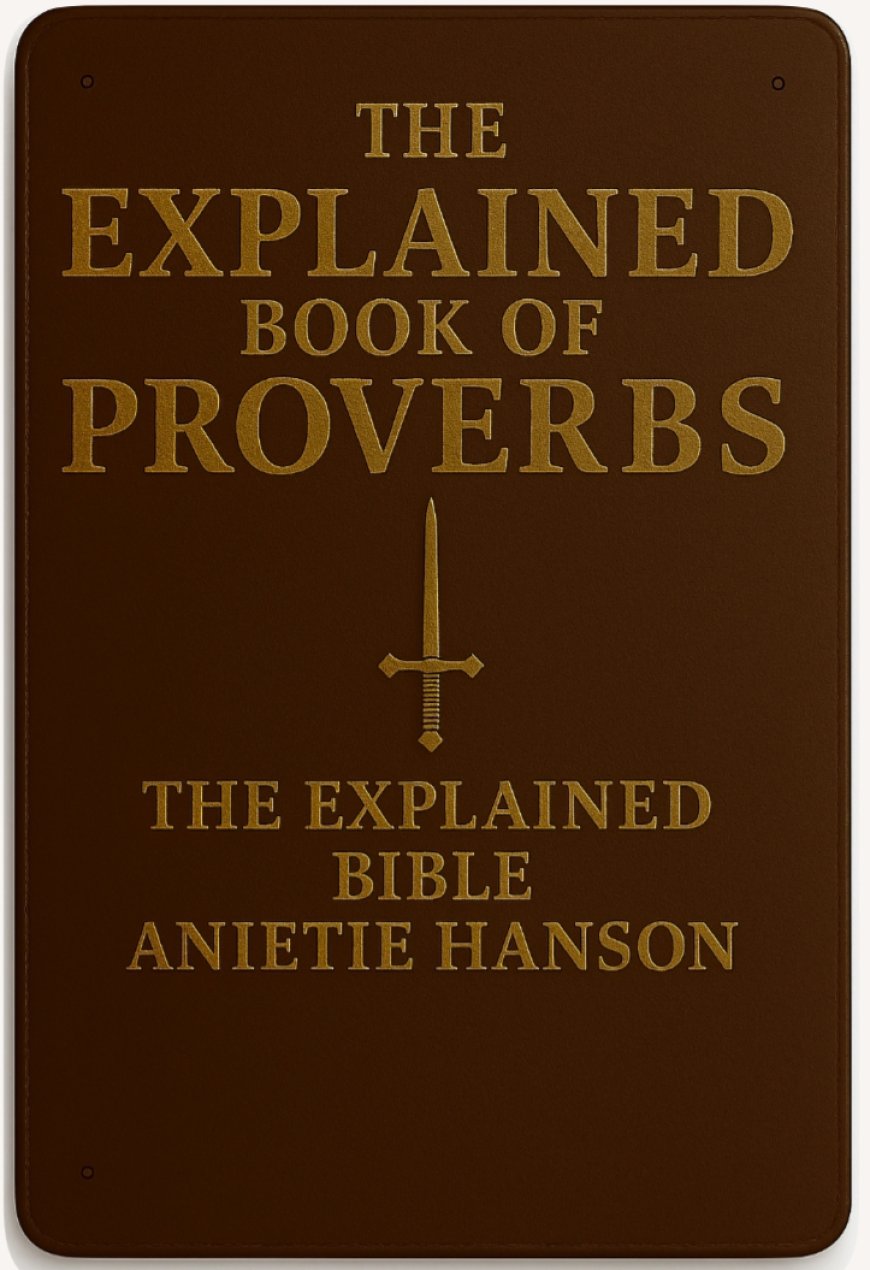
The Explained Book of Proverbs Chapter 14 by Anietie Hanson
Introduction
Proverbs Chapter 14 is a rich tapestry of wisdom written by Solomon, providing sharp contrasts between wisdom and folly, righteousness and wickedness, diligence and laziness. It underscores the practical implications of wisdom in our daily lives and warns against the pitfalls of foolish behavior. This chapter encourages us to reflect on how our actions align with God’s truth and His design for living wisely.
The chapter has 35 verses, each containing spiritual depth and practical advice. Let’s explore them verse by verse.
Explanation
Proverbs 14:1
"Every wise woman builds her house, but the foolish one tears it down with her own hands."
Explanation: The wise woman invests in her home and relationships, fostering unity, stability, and faith. Her efforts reflect diligence and wisdom (Proverbs 31:10-31). The foolish woman, however, destroys her household through neglect, pride, or destructive choices, highlighting the consequences of folly. This verse reminds us of the enduring impact of choices on both family and legacy.
Proverbs 14:2
"He who walks in his uprightness fears God, but he who is perverse in his ways despises him."
Explanation: The upright demonstrate their reverence for God through righteous living, which reflects their faith. In contrast, the perverse show contempt for God by disregarding His principles. Ecclesiastes 12:13 echoes this: "Fear God, and keep his commandments, for this is the whole duty of man."
Proverbs 14:3
"The fool’s talk brings a rod to his back, but the lips of the wise protect them."
Explanation: The fool’s talk—characterized by arrogance or recklessness—leads to punishment and trouble. The wise, on the other hand, use speech prudently, guarding themselves from harm. James 1:19 highlights this principle: "Let every man be swift to hear, slow to speak, and slow to anger." Words have immense power to either harm or shield.
Proverbs 14:4
"Where no oxen are, the crib is clean, but much increase is by the strength of the ox."
Explanation: This verse contrasts productivity with stagnation. A clean crib may indicate a lack of activity, but the strength of the ox symbolizes hard work and abundance. It reminds us that prosperity requires effort and preparation, echoing Proverbs 12:11: "He who tills his land shall have plenty of bread."
Proverbs 14:5
"A truthful witness will not lie, but a false witness pours out lies."
Explanation: This verse underscores the importance of integrity in testimony. A truthful witness upholds justice, while a false witness spreads deceit, harming others and society. Exodus 20:16 commands, "You shall not give false testimony against your neighbor." Truth strengthens relationships and upholds righteousness.
Proverbs 14:6
"A scoffer seeks wisdom, and doesn’t find it, but knowledge comes easily to a discerning person."
Explanation: The scoffer, marked by pride and cynicism, resists true wisdom, which requires humility. The discerning, however, approach learning with openness and respect, making it accessible to them. Proverbs 9:10 reminds us: "The fear of God is the beginning of wisdom."
Proverbs 14:7
"Stay away from a foolish man, for you won’t find knowledge on his lips."
Explanation: This verse advises avoiding foolish people whose words lack substance or guidance. Associating with them can lead to wasted time or misdirection. 1 Corinthians 15:33 similarly warns, "Bad company corrupts good morals." Surrounding oneself with wisdom is essential for growth.
Proverbs 14:8
"The wisdom of the prudent is to think about his way, but the folly of fools is deceit."
Explanation: The prudent carefully evaluate their actions and decisions, considering their consequences. In contrast, fools deceive themselves and others, ignoring wisdom’s path. Proverbs 4:26 encourages, "Make the path of your feet level, and let all your ways be established." Reflection is the foundation of wise choices.
Proverbs 14:9
"Fools mock at making atonement for sins, but among the upright there is goodwill."
Explanation: Fools dismiss the seriousness of sin and the need for atonement, showing contempt for God’s grace. The upright, however, value forgiveness and restoration, fostering goodwill in relationships. This verse parallels Psalm 32:5: "I acknowledged my sin to you... and you forgave the iniquity of my sin." Recognizing sin leads to reconciliation.
Proverbs 14:10
"The heart knows its own bitterness and joy; he will not share these with a stranger."
Explanation: This verse acknowledges the private, profound nature of personal emotions. Each individual experiences bitterness and joy uniquely, often in ways that are incomprehensible to others. Psalm 34:18 assures us: "God is near to the brokenhearted." Our deepest emotions are understood fully by God.
Proverbs 14:11
"The house of the wicked will be overthrown, but the tent of the upright will flourish."
Explanation: This verse contrasts the house of the wicked, which symbolizes temporary and unstable accomplishments, with the tent of the upright, representing a humble yet flourishing life. The flourishing of the righteous is grounded in their faith and alignment with God’s will. Psalm 92:12: "The righteous shall flourish like the palm tree." Their trust in God ensures their endurance and prosperity.
Proverbs 14:12
"There is a way which seems right to a man, but in the end it leads to death."
Explanation: This powerful warning highlights the deception of human judgment when it departs from God’s wisdom. Choices that seem right without divine guidance often lead to destruction. Proverbs 3:5-6 advises: "Trust in God with all your heart, and don’t lean on your own understanding." Submitting to God ensures the right path.
Proverbs 14:13
"Even in laughter the heart may be sorrowful, and mirth may end in heaviness."
Explanation: Outward laughter can hide inner sorrow, and temporary joy often fades into grief without lasting peace. True joy comes from God’s presence and promises, as Psalm 16:11 states: "You will fill me with joy in your presence." Superficial happiness cannot substitute for spiritual fulfillment.
Proverbs 14:14
"The unfaithful will be repaid for his own ways, but a good man will be rewarded for his."
Explanation: This verse highlights the principle of sowing and reaping: the unfaithful face consequences for their actions, while the good receive blessings and rewards for their righteousness. Galatians 6:7 reinforces this: "Whatever a man sows, that he will also reap." God’s justice ensures a fair outcome for all.
Proverbs 14:15
"A simple man believes everything, but the prudent man carefully considers his ways."
Explanation: The simple man, lacking discernment, accepts information without question, exposing himself to harm. In contrast, the prudent exercise wisdom by evaluating their actions and beliefs carefully. 1 Thessalonians 5:21 urges believers to "test all things." Critical thinking is a hallmark of wisdom.
Proverbs 14:16
"A wise man fears and shuns evil, but the fool is hot-headed and reckless."
Explanation: The wise man, recognizing the dangers of sin, avoids it out of reverence for God. The fool, however, recklessly pursues his own desires without considering the consequences. Job 28:28 states: "To depart from evil is understanding." Wisdom prioritizes godliness over impulsiveness.
Proverbs 14:17
"He who is quick to become angry will commit folly, and a crafty man is hated."
Explanation: Anger leads to impulsive actions (folly) that cause harm, while craftiness—deceptive scheming—is met with disdain. Ephesians 4:26 advises: "Be angry, and don’t sin." Controlling emotions and practicing integrity fosters harmony and respect.
Proverbs 14:18
"The simple inherit folly, but the prudent are crowned with knowledge."
Explanation: The simple gain nothing but folly due to their lack of wisdom, while the prudent are adorned with knowledge, symbolizing honor and understanding. This recalls Proverbs 4:7: "Wisdom is supreme—get wisdom." Knowledge is the reward of a discerning life.
Proverbs 14:19
"The evil bow down before the good, and the wicked at the gates of the righteous."
Explanation: This verse prophesies a reversal of fortunes, where the wicked acknowledge the superiority of the righteous. Ultimately, God’s justice exalts the humble and brings down the proud. Philippians 2:10 emphasizes that all will bow before Christ in recognition of His Lordship.
Proverbs 14:20
"The poor person is shunned even by his own neighbor, but the rich person has many friends."
Explanation: This highlights the superficiality of human relationships based on wealth rather than character. While the poor face rejection, the rich often attract insincere friends. Proverbs 19:4 echoes this: "Wealth adds many friends, but the poor is separated from his friend." True friendship transcends material gain.
Proverbs 14:21
"He who despises his neighbor sins, but he who has pity on the poor is blessed."
Explanation: Despising one’s neighbor reflects a sinful heart that disregards love and empathy. Showing pity to the poor, however, aligns with God’s call to compassion and brings blessings. This verse reflects Matthew 25:40: "Whatever you did for one of the least of these brothers of mine, you did for me." Compassion reveals godliness.
Proverbs 14:22
"Don’t they go astray who plot evil? But love and faithfulness belong to those who plan good."
Explanation: Evil schemes lead to spiritual wandering and destruction, while planning good reflects love and faithfulness. God honors those who act with integrity and kindness. Micah 6:8 reinforces this: "What does God require of you but to do justly, to love mercy, and to walk humbly with your God?"
Proverbs 14:23
"In all hard work there is profit, but the talk of the lips leads only to poverty."
Explanation: This verse extols the value of diligent labor, which produces profit and stability. Idle talk, however, devoid of action, results in poverty and unfulfilled potential. James 2:17 warns, "Faith without works is dead." Hard work reflects commitment and faithfulness.
Proverbs 14:24
"The crown of the wise is their riches, but the folly of fools produces only foolishness."
Explanation: The wise accumulate riches—not merely material wealth, but spiritual and relational prosperity—serving as their crown. In contrast, fools reap only folly, leading to waste and ruin. Proverbs 10:22 affirms: "God’s blessing brings wealth, and He adds no trouble to it."
Proverbs 14:25
"A truthful witness saves souls, but a false witness is deceitful."
Explanation: Truthful testimony preserves lives and strengthens trust, reflecting God’s truth and justice. A false witness, however, spreads deceit, causing harm and division. This ties to Exodus 20:16: "You shall not give false testimony." Truth fosters healing and reconciliation.
Proverbs 14:26
"In the fear of God is a secure fortress, and he will be a refuge for his children."
Explanation: Reverence and awe for God create a strong spiritual foundation—a fortress providing safety and security. This extends to the next generation, offering protection for one’s children. Psalm 91:2: "I will say of God, 'He is my refuge and my fortress.'" Trust in God brings enduring security.
Proverbs 14:27
"The fear of God is a fountain of life, turning people from the snares of death."
Explanation: Reverence for God is portrayed as a fountain of life, symbolizing vitality and renewal. It protects from sin’s destructive path (the snares of death). This aligns with Proverbs 9:10: "The fear of God is the beginning of wisdom." Seeking God leads to abundant life.
Proverbs 14:28
"In the multitude of people is the king’s glory, but in the lack of people is the destruction of the prince."
Explanation: This verse reflects the importance of wise leadership and thriving communities. A king’s glory is his people, highlighting the value of unity and prosperity. A lack of people, however, signals failure and ruin for leadership. Proverbs 29:2 similarly affirms: "When the righteous thrive, the people rejoice." Leaders influence the wellbeing of their nation.
Proverbs 14:29
"He who is slow to anger has great understanding, but he who has a quick temper displays folly."
Explanation: Patience reflects understanding, while a quick temper leads to impulsive actions and foolishness. This ties to James 1:19: "Let every man be swift to hear, slow to speak, and slow to anger." Self-control fosters wisdom and peace.
Proverbs 14:30
"The life of the body is a heart at peace, but envy rots the bones."
Explanation: A heart at peace—free from anxiety and conflict—promotes physical and spiritual health, while envy corrodes the soul and body. This parallels Psalm 37:7: "Be still before God and wait patiently for Him." Contentment brings life and renewal.
Proverbs 14:31
"He who oppresses the poor shows contempt for his Maker, but he who has pity on the needy honors him."
Explanation: Oppressing the poor reflects disdain for God, the Maker, who is the ultimate creator of all. Showing pity honors God by mirroring His compassion and concern for the vulnerable. Proverbs 19:17 reiterates this: "He who has pity on the poor lends to God, and He will repay him." Compassion glorifies God.
Proverbs 14:32
"The wicked is brought down in his calamity, but in death, the righteous has a refuge."
Explanation: The wicked face ruin in times of trouble due to their lack of faith and integrity. The righteous, however, even in death, find refuge in God’s promises and eternal hope. Psalm 46:1 reminds us, "God is our refuge and strength." Trust in God transcends earthly troubles.
Proverbs 14:33
"Wisdom rests in the heart of one who has understanding, and is even made known in the inward part of fools."
Explanation: Wisdom naturally dwells in the understanding heart, guiding decisions and attitudes. Even fools, though they lack wisdom, reveal their lack through their actions and words. Proverbs 4:7 underscores this: "Wisdom is supreme—get wisdom." Wisdom brings clarity to life.
Proverbs 14:34
"Righteousness exalts a nation, but sin is a disgrace to any people."
Explanation: A nation thrives through collective righteousness, reflecting integrity and justice. Conversely, sin causes shame and degradation, leading to societal downfall. Proverbs 29:2 echoes this: "When the righteous thrive, the people rejoice." God’s principles bring prosperity to nations.
Proverbs 14:35
"A servant who deals wisely has the king’s favor, but his wrath is against one who causes shame."
Explanation: Wise actions earn the king’s favor, symbolizing honor and reward for diligence and integrity. However, shameful conduct invites wrath and disapproval. Proverbs 22:29 highlights this: "Do you see a man skilled in his work? He will serve kings." Wisdom earns trust and advancement.
Questions and Answers on Proverbs Chapter 14
1. What does Proverbs 14:1 teach about wise and foolish women?
o The wise woman builds her home, fostering unity and stability, while the foolish woman tears it down through destructive choices (Proverbs 31:10-31).
2. What is the significance of fearing God in Proverbs 14:2?
o Reverence for God leads to uprightness, while perversion reflects disdain for Him (Ecclesiastes 12:13).
3. How does Proverbs 14:12 warn against self-reliance?
o Choices that seem right without God’s guidance lead to death, emphasizing the need to trust God (Proverbs 3:5-6).
4. What does Proverbs 14:21 teach about compassion?
o Showing pity to the poor honors God and reflects His character (Matthew 25:40).
5. How does Proverbs 14:23 highlight the value of work?
o Hard work yields profit, while idle talk leads to poverty (James 2:17).
6. What does Proverbs 14:26 promise to those who fear God?
o Fear of God provides security and serves as a refuge for their children (Psalm 91:2).
7. How does Proverbs 14:27 portray the fear of God?
o It is a fountain of life, turning people from the snares of death (Proverbs 9:10).
8. What does Proverbs 14:30 teach about envy and peace?
o Peace fosters life and health, while envy corrodes the soul and body (Psalm 37:7).
9. What does Proverbs 14:32 reveal about the righteous in death?
o Even in death, the righteous find refuge in God’s promises (Psalm 46:1).
10. How does Proverbs 14:34 relate righteousness to a nation?
o Righteousness strengthens a nation, while sin brings disgrace (Proverbs 29:2).
11. What does Proverbs 14:35 teach about wisdom in service?
o Wise servants earn favor, while shameful conduct incurs wrath (Proverbs 22:29).
12. What overarching message does Proverbs Chapter 14 convey?
o It contrasts wisdom and folly, showing that righteousness brings life and flourishing, while sin leads to destruction.
Final Thoughts
Proverbs Chapter 14 is a remarkable guide for righteous living, emphasizing the contrasts between wisdom and folly, humility and pride, compassion and cruelty. With 35 verses, the chapter explores the practical and eternal consequences of choices and highlights how reverence for God transforms individuals and societies. Its teachings inspire us to build lives, relationships, and nations that reflect God’s principles.
The chapter reminds us that righteousness brings lasting peace and joy, while sin results in ruin and disgrace.
What's Your Reaction?
 Like
0
Like
0
 Dislike
0
Dislike
0
 Love
0
Love
0
 Funny
0
Funny
0
 Angry
0
Angry
0
 Sad
0
Sad
0
 Wow
0
Wow
0