













Genesis Chapter 16
Genesis Chapter 16
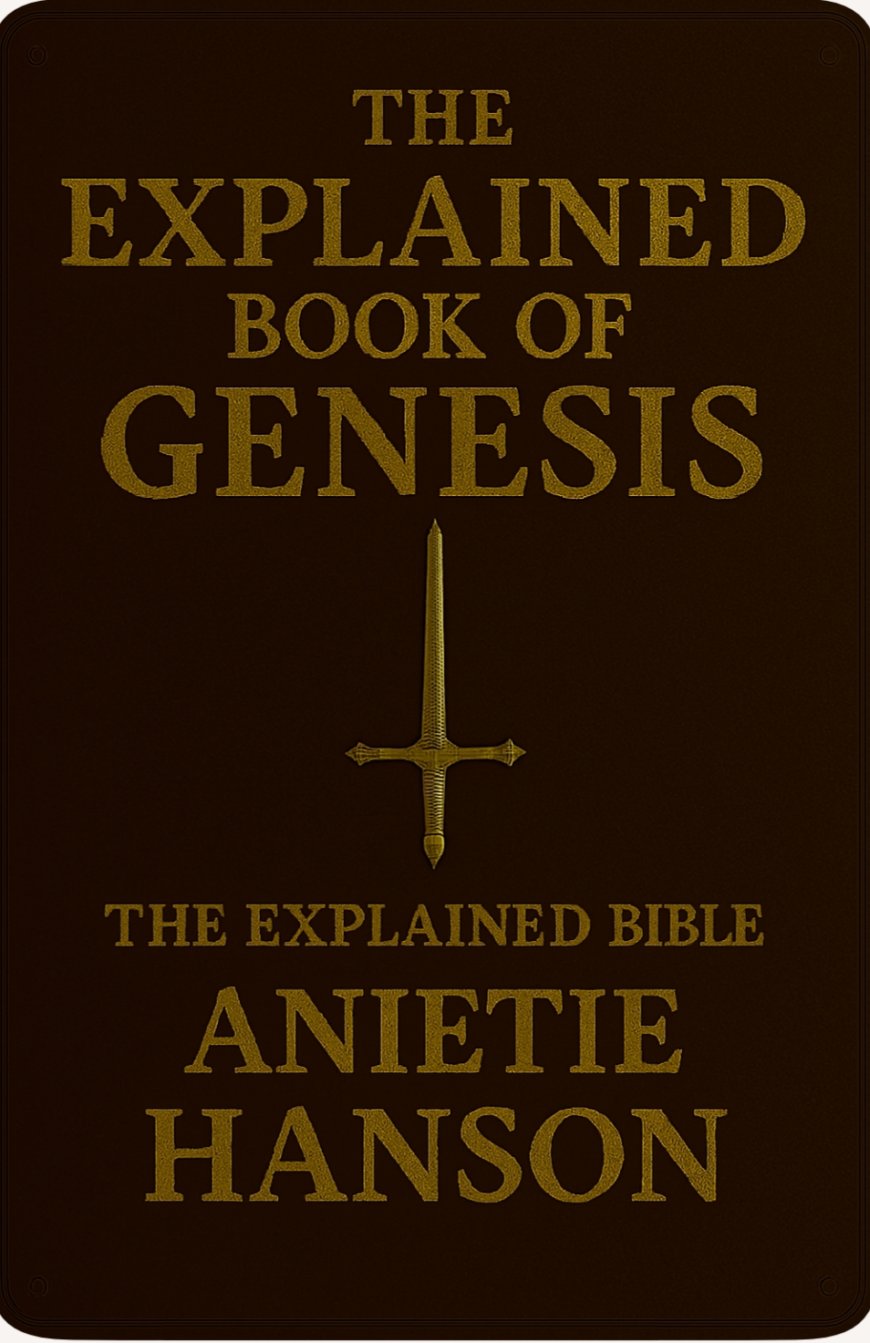
The Explained Book of Genesis Chapter 16 by Anietie Hanson
Study Bible: Genesis Chapter 16 – Hagar and the Birth of Ishmael
Introduction
Genesis Chapter 16 narrates a key episode in Abram’s journey of faith, highlighting human impatience and God’s mercy. Sarai (later Sarah) and Abram attempt to fulfill God’s promise of an heir through their own methods, introducing Hagar, Sarai’s Egyptian servant. The chapter explores themes of human frailty, God’s faithfulness, and the unfolding of His covenant despite human mistakes. The birth of Ishmael creates both immediate and prophetic implications for Abram’s lineage and the world.
With 16 verses, Genesis 16 reveals the struggles of faith and trust, while showcasing God’s grace and His plans for redemption.
Explanation
Genesis 16:1
"Now Sarai, Abram’s wife, bore him no children. She had a servant, an Egyptian, whose name was Hagar."
Explanation: The verse introduces Sarai’s barrenness, a challenge she had faced since her marriage to Abram. In the ancient context, childlessness carried social and emotional burdens, often prompting unconventional solutions. Hagar, an Egyptian servant, symbolizes Sarai and Abram’s time in Egypt (Genesis 12:10–20) and the lingering consequences of their choices. Psalm 127:3 reminds: "Children are a heritage from God, the fruit of the womb is His reward." This sets the stage for the tension between human effort and divine timing.
Genesis 16:2
"Sarai said to Abram, 'See now, God has restrained me from bearing. Please go in to my servant. It may be that I will obtain children by her.' Abram listened to the voice of Sarai."
Explanation: Sarai’s suggestion reflects her impatience and her struggle to trust God’s promise of an heir. The cultural practice of using a servant as a surrogate for childbearing was common, but it also reveals a reliance on human solutions over divine intervention. Abram’s agreement without seeking God’s guidance mirrors Adam’s response to Eve in Genesis 3:6. Isaiah 30:18 reassures: "God longs to be gracious to you; He rises to show you compassion." This verse highlights the importance of waiting on God’s timing.
Genesis 16:3
"Sarai, Abram’s wife, took Hagar the Egyptian, her servant, and gave her to Abram her husband to be his wife, after Abram had lived ten years in the land of Canaan."
Explanation: The act of giving Hagar as a secondary wife reflects Sarai’s desperation after ten years of waiting in Canaan. This decision introduces tension into their household and foreshadows future conflicts. Proverbs 3:5–6 advises: "Trust in God with all your heart, and do not lean on your own understanding." By taking matters into their own hands, Abram and Sarai complicate God’s plan, yet God’s faithfulness remains steadfast.
Genesis 16:4
"He went in to Hagar, and she conceived. When she saw that she had conceived, her mistress was despised in her eyes."
Explanation: Hagar’s conception shifts the power dynamic within the household. Her contempt for Sarai reveals the relational fallout of this decision, as pride and resentment take root. This tension exemplifies the consequences of stepping outside God’s will. Galatians 6:7 warns: "Do not be deceived: God cannot be mocked. A man reaps what he sows." The animosity between Hagar and Sarai sets the stage for ongoing struggles.
Genesis 16:5
"Sarai said to Abram, 'This wrong is your fault! I gave my servant into your bosom, and when she saw that she had conceived, she despised me. May God judge between me and you!'"
Explanation: Sarai’s complaint reflects the emotional turmoil stemming from her own decision, yet she blames Abram for the conflict. Her appeal to God as judge reveals her awareness of the need for divine intervention to resolve their strife. Proverbs 19:3 observes: "A person’s own folly leads to their ruin, yet their heart rages against God." This verse underscores the human tendency to project blame rather than take responsibility.
Genesis 16:6
"But Abram said to Sarai, 'Behold, your maid is in your hand. Do to her whatever is good in your eyes.' Sarai dealt harshly with her, and she fled from her face."
Explanation: Abram’s response reveals his attempt to maintain peace within the household by yielding authority over Hagar to Sarai. However, Sarai’s harsh treatment causes Hagar to flee, highlighting the emotional toll of their decisions. The tension between Sarai and Hagar reflects the relational consequences of bypassing God’s plan. Colossians 3:12 calls believers to act with compassion: "Clothe yourselves with compassion, kindness, humility, gentleness, and patience." This moment underscores the need for grace and understanding in conflict resolution.
Genesis 16:7
"God’s angel found her by a fountain of water in the wilderness, by the fountain on the way to Shur."
Explanation: The angel of God represents divine intervention, demonstrating that Hagar is not abandoned despite her circumstances. The fountain of water in the wilderness symbolizes life and hope amidst desolation. The location, on the way to Shur, suggests Hagar was returning to Egypt, seeking familiarity and refuge. Psalm 34:18 provides comfort: "God is close to the brokenhearted and saves those who are crushed in spirit." This encounter reveals God’s care for the marginalized and oppressed.
Genesis 16:8
"He said, 'Hagar, Sarai’s servant, where did you come from? Where are you going?' She said, 'I am fleeing from the face of my mistress Sarai.'"
Explanation: The angel’s questions prompt Hagar to reflect on her situation, emphasizing self-awareness and accountability. Referring to her as Sarai’s servant highlights her current role and situation, even as God prepares to address her identity and future. This moment mirrors God’s question to Adam and Eve in Genesis 3:9, inviting reflection rather than condemnation. Proverbs 3:5 encourages: "Trust in God with all your heart and do not lean on your own understanding." Hagar’s response reveals her vulnerability and need for guidance.
Genesis 16:9
"God’s angel said to her, 'Return to your mistress, and submit yourself under her hand.'"
Explanation: The command to return and submit may appear challenging, but it reflects God’s purpose in restoring relationships and aligning Hagar’s journey with His greater plan. Submission in this context is not about subjugation but about trusting God’s sovereignty and timing. Ephesians 5:21 speaks to mutual submission: "Submit to one another out of reverence for Christ." This instruction redirects Hagar toward reconciliation and divine provision.
Genesis 16:10
"God’s angel said to her, 'I will greatly multiply your offspring, that they will not be counted for multitude.'"
Explanation: The angel’s promise of countless descendants mirrors God’s earlier covenant with Abram, highlighting Hagar’s integral role in His plan. This blessing reflects God’s grace and faithfulness, extending hope to Hagar despite her marginalized position. Isaiah 54:1 affirms: "Sing, barren woman…because more are the children of the desolate than of her who has a husband." This verse emphasizes
Genesis 16:11
"God’s angel said to her, 'Behold, you are with child, and will bear a son. You shall call his name Ishmael, because God has heard your affliction.'"
Explanation: The name Ishmael means "God hears," emphasizing God’s attentiveness to Hagar’s distress. The angel’s declaration underscores God’s compassion and assurance in the midst of human suffering. This marks Ishmael as a figure blessed by divine attention, though his life will carry significant implications for history. Psalm 34:15 states: "The eyes of God are on the righteous, and His ears are attentive to their cry." Hagar’s experience reflects God’s responsiveness to those who call out in affliction.
Genesis 16:12
"He will be like a wild donkey among men. His hand will be against every man, and every man’s hand against him. He will live opposed to all his brothers."
Explanation: The description of Ishmael as a wild donkey signifies independence and untamed freedom, reflecting the strength and resilience he will exhibit. The prophecy about conflict “against every man” foreshadows the tensions that Ishmael’s descendants will experience in relation to others. This verse prophetically hints at the complex dynamics surrounding Ishmael’s lineage in later biblical and historical contexts. Job 39:5–8 describes the wild donkey: "Who has set the wild donkey free? It ranges the hills for its pasture." This symbolizes both freedom and struggle.
Genesis 16:13
"She called the name of God who spoke to her, 'You are a God who sees,' for she said, 'Have I even stayed alive after seeing Him?'"
Explanation: Hagar names God “El Roi,” meaning "the God who sees me." This is a profound moment of personal revelation, as Hagar recognizes God’s care and presence in her life, even in her lowest moments. Her survival after encountering God reflects His mercy and grace. Psalm 33:18 reinforces: "The eyes of God are on those who fear Him, on those whose hope is in His unfailing love." This encounter highlights the intimate nature of God’s relationship with humanity.
Genesis 16:14
"Therefore the well was called Beer Lahai Roi. Behold, it is between Kadesh and Bered."
Explanation: The name Beer Lahai Roi, meaning "Well of the Living One who sees me," commemorates Hagar’s encounter with God. The geographical details “between Kadesh and Bered” situate the event historically and symbolically, emphasizing the lasting significance of this divine intervention. Wells often represent life, provision, and divine encounters in Scripture, such as Jesus meeting the Samaritan woman at Jacob’s well (John 4:6–14). This well becomes a sacred landmark tied to God’s faithfulness.
Genesis 16:15
"Hagar bore a son for Abram. Abram called the name of his son, whom Hagar bore, Ishmael."
Explanation: Hagar’s fulfillment of the angel’s prophecy by bearing Ishmael demonstrates the accuracy and faithfulness of God’s word. Abram naming the child Ishmael signifies acceptance of this divine message and acknowledgment of God’s role in the child’s conception. Proverbs 19:21 affirms: "Many are the plans in a person’s heart, but it is God’s purpose that prevails." This verse reminds readers of God’s sovereignty in human affairs.
Genesis 16:16
"Abram was eighty-six years old when Hagar bore Ishmael to Abram."
Explanation: The mention of Abram’s age, eighty-six, highlights the extended waiting period for the fulfillment of God’s ultimate promise of a son through Sarai. Ishmael’s birth represents a step within God’s broader plan, though it also introduces complexities into Abram’s household. Psalm 90:4 reflects on God’s timing: "A thousand years in Your sight are like a day that has just gone by." This verse underscores the contrast between human impatience and divine timing.
12 Relevant Questions and Answers on Genesis Chapter 16
1. What challenge does Sarai face in Genesis 16:1?
o Sarai’s barrenness leads to emotional and social pressure, influencing her decisions (Psalm 127:3).
2. Why does Sarai give Hagar to Abram in Genesis 16:2?
o Sarai seeks to fulfill God’s promise through human effort, reflecting impatience and doubt (Proverbs 3:5–6).
3. How does Hagar respond to her conception in Genesis 16:4?
o She despises Sarai, creating tension and conflict within the household (Galatians 6:7).
4. What does Abram’s response in Genesis 16:6 reveal about his leadership?
o Abram yields to Sarai’s authority, aiming to resolve conflict but avoiding direct involvement (Colossians 3:12).
5. What is significant about the angel’s appearance in Genesis 16:7?
o It demonstrates God’s care and intervention for the oppressed, even in the wilderness (Psalm 34:18).
6. What does the name Ishmael in Genesis 16:11 signify?
o It means "God hears," emphasizing God’s attentiveness to Hagar’s distress (Psalm 34:15).
7. How is Ishmael described in Genesis 16:12?
o As a wild donkey, symbolizing independence and conflict, foreshadowing tensions in his lineage (Job 39:5–8).
8. What revelation does Hagar have about God in Genesis 16:13?
o She recognizes God as El Roi, the One who sees her, emphasizing His intimate care (Psalm 33:18).
9. What does the well in Genesis 16:14 represent?
o It symbolizes divine provision and a sacred encounter, marking a place of hope and life (John 4:6–14).
10. How does Abram respond to Ishmael’s birth in Genesis 16:15?
o He acknowledges God’s message by naming the child Ishmael, accepting the divine plan (Proverbs 19:21).
11. What does Abram’s age in Genesis 16:16 signify?
o It highlights the prolonged waiting for the ultimate fulfillment of God’s promise (Psalm 90:4).
12. What overarching lesson does Genesis 16 convey?
o It emphasizes human frailty, divine faithfulness, and God’s redemptive plan despite human mistakes.
Final Thoughts
Genesis Chapter 16 highlights the complexities of faith, human impatience, and God’s unchanging mercy. Through the story of Hagar and Ishmael, we see how God’s purposes prevail, even when human decisions introduce conflict and tension. The chapter reveals God’s care for the marginalized, His attentiveness to human suffering, and His faithfulness in fulfilling His promises. With 16 verses, it serves as a reminder of the challenges of trust and the importance of relying on God’s timing.
Key Themes:
1. Human Impatience: Sarai and Abram’s decision reflects the struggle to wait on God’s promises.
2. God’s Care for the Oppressed: Hagar’s encounter with the angel reveals God’s attentiveness to her plight.
3. Divine Promises and Faithfulness: The birth and naming of Ishmael underscore God’s role in human history.
4. Relational Tensions: The fallout between Sarai and Hagar demonstrates the consequences of human decisions outside of God’s will.
What's Your Reaction?
 Like
0
Like
0
 Dislike
0
Dislike
0
 Love
0
Love
0
 Funny
0
Funny
0
 Angry
0
Angry
0
 Sad
0
Sad
0
 Wow
0
Wow
0