












Genesis Chapter 35
Genesis Chapter 35
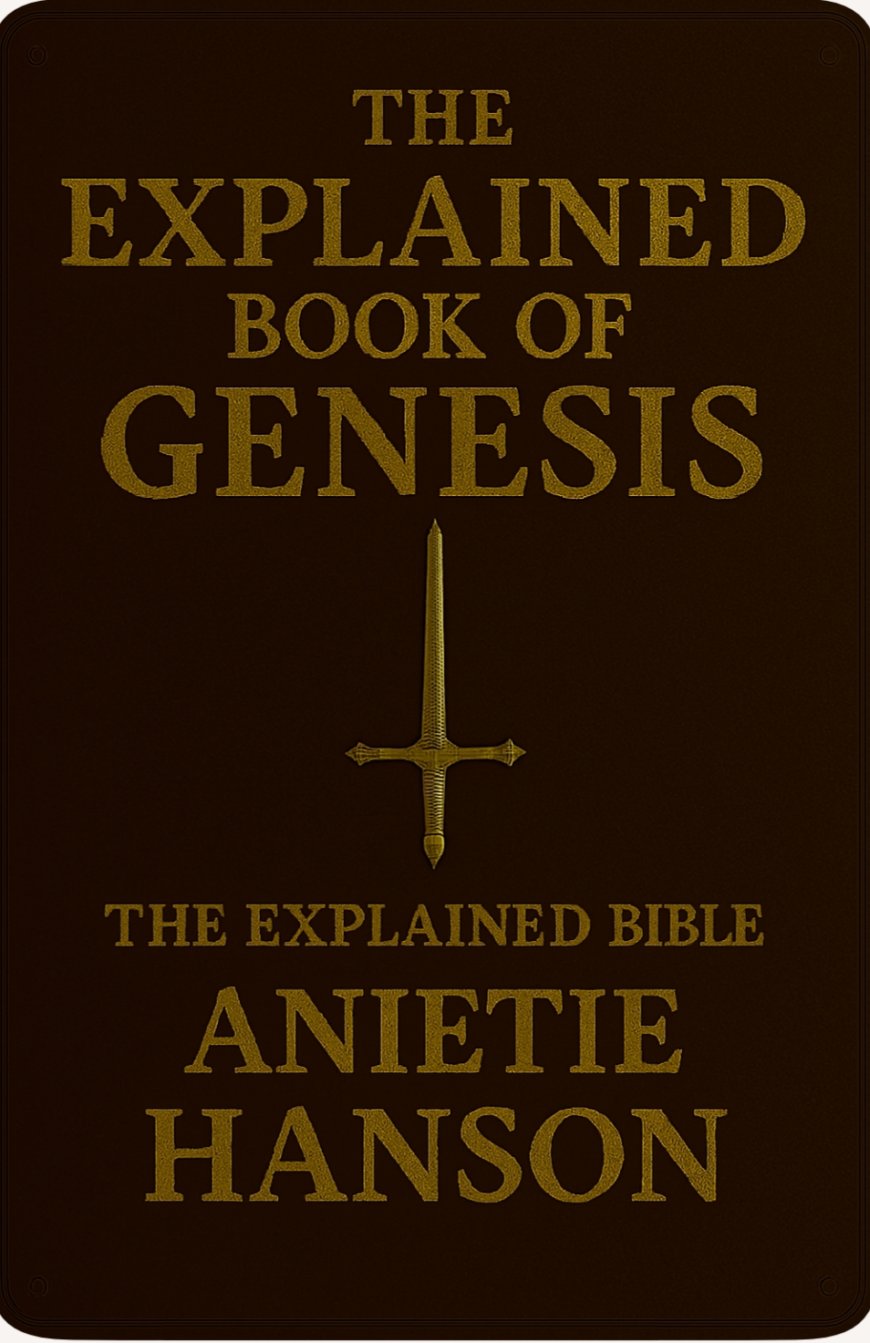
The Explained Book of Genesis Chapter 35 by Anietie Hanson
Introduction
Genesis Chapter 35 presents a pivotal moment in Jacob’s journey, where he returns to Bethel, fulfills his vow to God, and experiences personal and spiritual transformation. This chapter contains God’s reaffirmation of the covenant made with Abraham and Isaac, and the solidification of Jacob’s identity as Israel. It also records significant events such as the deaths of Rachel and Isaac, underscoring themes of renewal, faithfulness, and legacy.
With 29 verses, Genesis Chapter 35 emphasizes the importance of worship, obedience, and the fulfillment of divine promises. Let’s delve deeply into each verse to uncover its symbols, meanings, and connections to other Scriptures, using the World English Bible (WEB) exclusively.
Verse-by-Verse Explanation
Genesis 35:1
"God said to Jacob, 'Arise, go up to Bethel, and live there. Make there an altar to God, who appeared to you when you fled from the face of Esau your brother.'"
Explanation: God’s command to return to Bethel—a place of spiritual significance where Jacob had previously encountered Him (Genesis 28:11–22)—calls Jacob to renewal and fulfillment of his earlier vow. The instruction to build an altar highlights the importance of worship and remembrance. Bethel means “house of God,” symbolizing divine presence and blessing. Ecclesiastes 5:4 emphasizes the importance of fulfilling vows: "When you vow a vow to God, don’t defer to pay it." This verse sets the stage for Jacob’s spiritual obedience.
Genesis 35:2
"Then Jacob said to his household, and to all who were with him, 'Put away the foreign gods that are among you, purify yourselves, and change your garments.'"
Explanation: Jacob’s instruction to put away foreign gods underscores his commitment to monotheism and the covenant with God. Purification and changing garments symbolize spiritual renewal and preparation for worship. The foreign gods, possibly remnants from Shechem (Genesis 34:29), represent distractions from true devotion. Joshua 24:14 echoes this call: "Put away the gods which your fathers served beyond the River." Jacob’s leadership reflects his spiritual maturity.
Genesis 35:3
"Let us arise, and go up to Bethel. I will make there an altar to God, who answered me in the day of my distress, and was with me on the way which I went."
Explanation: Jacob’s declaration—“God, who answered me in the day of my distress”—acknowledges divine faithfulness during his challenges, including fleeing Esau and later conflicts. The altar signifies gratitude and dedication to God’s covenant. Psalm 34:17 resonates with Jacob’s experience: "The righteous cry, and God hears, and delivers them out of all their troubles." Jacob’s focus on worship reveals his reliance on God.
Genesis 35:4
"They gave to Jacob all the foreign gods which were in their hands, and the rings which were in their ears; and Jacob hid them under the oak which was by Shechem."
Explanation: The act of burying foreign gods and earrings under the oak signifies renunciation of idolatry and worldly adornments. The oak, a significant tree often linked with covenantal acts (Joshua 24:26), serves as a memorial of their spiritual cleansing. Deuteronomy 7:25 reflects the rejection of idolatry: "You shall burn the engraved images of their gods." This act prepares Jacob’s household for renewed worship.
Genesis 35:5
"They traveled, and the terror of God was on the cities that were around them, and they didn’t pursue the sons of Jacob."
Explanation: The terror of God reflects divine protection, shielding Jacob’s family from retaliation by neighboring cities after the events in Shechem (Genesis 34). This supernatural fear illustrates God’s sovereignty over human affairs, ensuring His plans prevail. Psalm 34:7 resonates: "The angel of God encamps around those who fear Him, and delivers them." Jacob’s journey continues under divine assurance, emphasizing reliance on God’s providence.
Genesis 35:6
"So Jacob came to Luz (that is, Bethel), which is in the land of Canaan, he and all the people who were with him."
Explanation: Luz, renamed Bethel (Genesis 28:19), is Jacob’s destination, symbolizing a return to the place where he first encountered God. This journey marks the fulfillment of his vow and reaffirms his spiritual commitment. Bethel, meaning “house of God,” underscores God’s abiding presence in Jacob’s life. Psalm 23:6 reflects this divine dwelling: "I will dwell in God’s house forever." The arrival signifies renewal and covenantal obedience.
Genesis 35:7
"He built an altar there, and called the place El Bethel, because there God was revealed to him, when he fled from the face of his brother."
Explanation: Jacob names the altar El Bethel—meaning “God of Bethel”—to honor God’s revelation and faithfulness during his flight from Esau. This naming memorializes the divine encounter that shaped Jacob’s destiny. Acts 7:33 emphasizes the sanctity of such places: "Take off your sandals, for the place where you are standing is holy ground." The act of altar-building symbolizes worship, gratitude, and covenant renewal.
Genesis 35:8
"Deborah, Rebekah’s nurse, died, and she was buried below Bethel under the oak; and its name was called Allon Bacuth."
Explanation: The death of Deborah, Rebekah’s nurse, introduces sorrow amidst renewal. The burial under the oak at Allon Bacuth (meaning “oak of weeping”) signifies mourning and remembrance. Deborah’s presence reflects the legacy of Abraham’s household, showing continuity in God’s covenantal story. Ecclesiastes 3:4 captures the balance of life: "A time to weep, and a time to laugh." Her passing reminds us of life’s transience and God’s enduring promises.
Genesis 35:9
"God appeared to Jacob again, when he came from Paddan Aram, and blessed him."
Explanation: God’s appearance and blessing reaffirm His promises to Jacob, strengthening their covenant. This divine encounter parallels Jacob’s earlier visions, highlighting God’s consistent presence and favor. The act of blessing emphasizes God’s unwavering commitment to His chosen people. Numbers 6:24 reflects this divine favor: "God bless you and keep you." This moment marks a new chapter in Jacob’s spiritual journey.
Genesis 35:10
"God said to him, 'Your name is Jacob. Your name shall not be Jacob any more, but your name will be Israel.' He named him Israel."
Explanation: Here, God reaffirms Jacob’s new identity as Israel, meaning “one who struggles with God” or “God prevails.” This renaming, first introduced in Genesis 32:28, signifies Jacob’s transformation from a deceiver (as implied by "Jacob") to a covenantal leader. The renaming symbolizes a fresh start and aligns Jacob with his divine purpose. Isaiah 62:2 reflects the significance of a new name: "You will be called by a new name, which the mouth of God will name." This moment establishes Jacob’s role in God’s covenant with his forefathers.
Genesis 35:11
"God said to him, 'I am God Almighty. Be fruitful and multiply. A nation and a company of nations will be from you, and kings will come out of your body.'"
Explanation: God identifies Himself as “God Almighty” (El Shaddai), emphasizing His supreme power and ability to fulfill His promises. The command to “be fruitful and multiply” echoes the blessing given to Adam (Genesis 1:28) and Noah (Genesis 9:1). The prophecy that kings would come from Jacob’s lineage foretells the future monarchy of Israel, including King David and ultimately Jesus Christ. Revelation 19:16 proclaims: "He has on His garment and on His thigh a name written, 'King of Kings and Lord of Lords.'" This verse reinforces Jacob’s legacy as central to God’s redemptive plan.
Genesis 35:12
"The land which I gave to Abraham and Isaac, I will give it to you, and to your offspring after you I will give the land."
Explanation: God reaffirms the promise of the land of Canaan, originally given to Abraham (Genesis 17:8) and Isaac (Genesis 26:3). This continuity underscores God’s faithfulness across generations. The land signifies not only physical territory but also spiritual inheritance and a place where God’s people would thrive. Hebrews 11:9 describes the faith required to embrace this promise: "By faith he lived in the land of promise as in a land not his own." The covenant reflects God’s unchanging commitment.
Genesis 35:13
"God went up from him in the place where He spoke with him."
Explanation: The phrase “God went up” reflects a visible manifestation of God’s presence, recalling similar divine encounters such as with Abraham (Genesis 17:22). This departure highlights the holiness of the moment and the weight of the promises just declared. Judges 6:21 echoes this imagery of divine departure: "Then the angel of God went away out of his sight." The sacred encounter marks a turning point in Jacob’s journey.
Genesis 35:14
"Jacob set up a pillar in the place where He spoke with him, a pillar of stone. He poured out a drink offering on it, and poured oil on it."
Explanation: Jacob erects a pillar of stone as a memorial to the divine encounter, much like his earlier act at Bethel (Genesis 28:18). The drink offering and oil signify devotion and consecration, marking the place as holy. Such rituals foreshadow later practices in Israel’s worship, as seen in Leviticus 23:13: "Its drink offering shall be of wine, the fourth part of a hin." The pillar serves as a lasting testament to God’s faithfulness.
Genesis 35:15
"Jacob called the name of the place where God spoke with him 'Bethel.'"
Explanation: The naming of the place as Bethel (meaning “house of God”) reiterates its significance as a sacred location of divine revelation. By reaffirming the name, Jacob cements its importance in his spiritual journey. This act ties the present encounter to the earlier one (Genesis 28:19), showing the continuity of God’s relationship with him. Psalm 84:4 celebrates such holy places: "Blessed are those who dwell in Your house; they are always praising You." Bethel symbolizes God’s abiding presence.
Genesis 35:16
"They traveled from Bethel. There was still some distance to come to Ephrath, and Rachel travailed. She had hard labor."
Explanation: As Jacob’s family journeys from Bethel, Rachel experiences hard labor near Ephrath, later identified as Bethlehem (Micah 5:2). Rachel’s labor mirrors the pains of human frailty but also anticipates the birth of Benjamin, a key figure in Israel’s lineage. This moment foreshadows Bethlehem’s prophetic significance, where Jesus Christ would be born (Matthew 2:1). Psalm 139:13 underscores God’s role in birth: "For You formed my inmost being. You knit me together in my mother’s womb." Rachel’s struggle demonstrates the bittersweet nature of life and promise.
Genesis 35:17
"When she was in hard labor, the midwife said to her, 'Don’t be afraid, for now you will have another son.'"
Explanation: The midwife’s encouragement reflects hope amidst Rachel’s anguish, reassuring her of the birth of another son. This declaration anticipates the naming of Benjamin, whose lineage would shape Israel’s future. The midwife’s role reflects God’s sovereignty in bringing life even through hardship. Isaiah 66:9 offers comfort: "Shall I bring to the birth, and not cause to be delivered? says God." Despite Rachel’s suffering, this son would fulfill part of God’s promise to Jacob.
Genesis 35:18
"As her soul was departing (for she died), she named him Benoni, but his father named him Benjamin."
Explanation: Rachel names her son Benoni (meaning “son of my sorrow”), reflecting her grief as she dies in childbirth. Jacob, however, renames him Benjamin (meaning “son of the right hand”), signifying honor and favor. This dual naming illustrates the tension between sorrow and hope. Benjamin’s lineage, including Israel’s first king, Saul (1 Samuel 9:1–2), would carry significant weight in Israel’s history. Revelation 21:4 reflects God’s ultimate comfort: "He will wipe away every tear from their eyes." Rachel’s death juxtaposes human loss with divine purpose.
Genesis 35:19
"Rachel died, and was buried on the way to Ephrath (also called Bethlehem)."
Explanation: Rachel’s burial near Bethlehem marks a poignant moment in Jacob’s journey. Her grave becomes a sacred memorial, later referenced in Jeremiah 31:15: "A voice is heard in Ramah, lamentation and bitter weeping, Rachel weeping for her children." This verse prophetically points to the sorrow during Herod’s massacre of infants (Matthew 2:18). Rachel’s burial connects her legacy to future events of sorrow and redemption.
Genesis 35:20
"Jacob set up a pillar on her grave. The same is the Pillar of Rachel’s grave to this day."
Explanation: The pillar on Rachel’s grave memorializes her life and her pivotal role in Jacob’s family. This act reflects Jacob’s deep love and respect for Rachel, solidifying her memory in Israel’s history. Such memorials serve as physical reminders of divine faithfulness and human legacy. Joshua 4:7 emphasizes the importance of memorials: "These stones shall be for a memorial to the children of Israel forever." Rachel’s grave becomes a site of reflection on life, loss, and continuity.
Genesis 35:21
"Israel traveled, and spread his tent beyond the tower of Eder."
Explanation: Jacob, referred to here as Israel, continues his journey and settles near the tower of Eder (meaning “tower of the flock”). This location, associated with shepherding, symbolizes provision and protection. Micah 4:8 prophetically links the tower of the flock to the coming of the Messiah: "You, tower of the flock... to you it will come, the former dominion will come." This verse connects Jacob’s movement to the broader messianic narrative.
Genesis 35:22
"While Israel lived in that land, Reuben went and lay with Bilhah, his father’s concubine, and Israel heard of it."
Explanation: Reuben’s act of lying with Bilhah, Rachel’s maid and Jacob’s concubine, demonstrates a severe breach of family honor and authority. This action, possibly a power move, ultimately costs Reuben his birthright (Genesis 49:4). 1 Corinthians 6:18 warns against such immorality: "Flee sexual immorality. Every sin that a man does is outside the body." Jacob’s silence reflects his disappointment, foreshadowing Reuben’s diminished role in the family.
Genesis 35:23–26
"The sons of Jacob were twelve: the sons of Leah: Reuben (Jacob’s firstborn), Simeon, Levi, Judah, Issachar, and Zebulun; the sons of Rachel: Joseph and Benjamin; the sons of Bilhah (Rachel’s servant): Dan and Naphtali; and the sons of Zilpah (Leah’s servant): Gad and Asher. These are the sons of Jacob, who were born to him in Paddan Aram."
Explanation: These verses outline the twelve sons of Jacob, who form the tribes of Israel. Each son’s lineage carries prophetic significance, shaping Israel’s history. For example, Judah becomes the ancestor of David and Jesus (Genesis 49:10), while Levi represents the priestly tribe. The diversity among the mothers reflects God’s ability to work through imperfect human relationships to accomplish His purposes. Romans 8:28 assures: "We know that all things work together for good for those who love God." This genealogical list emphasizes God’s covenantal faithfulness.
Genesis 35:27
"Jacob came to Isaac his father, to Mamre, to Kiriath Arba (which is Hebron), where Abraham and Isaac lived as foreigners."
Explanation: Jacob’s return to Hebron, where Isaac resides, marks a reunion with his father and the continuation of the patriarchal legacy. Hebron, significant as Abraham’s burial site, represents God’s faithfulness to His promises. Genesis 13:18 highlights its importance: "Abram moved his tent and came and lived by the oaks of Mamre, which are in Hebron, and built an altar there to God." This moment reflects generational continuity in God’s plan.
Genesis 35:28–29
"The days of Isaac were one hundred eighty years. Isaac gave up the spirit, and died, and was gathered to his people, old and full of days. Esau and Jacob, his sons, buried him."
Explanation: Isaac’s death at 180 years old marks the end of a significant patriarchal era. The phrase “gathered to his people” reflects the belief in a continued existence beyond death, signifying reunion with ancestors. The reconciliation of Esau and Jacob, seen in their joint burial of Isaac, demonstrates healing in their relationship. Hebrews 11:13 honors patriarchal faith: "These all died in faith, not having received the promises, but having seen them and embraced them from afar." Isaac’s death concludes a chapter of faith and legacy.
Questions and Answers on Genesis Chapter 35
1. Why did God tell Jacob to return to Bethel in Genesis 35:1?
o To fulfill Jacob’s vow and renew the covenant made during his earlier encounter with God (Genesis 28:20–22).
2. Why did Jacob instruct his household to put away foreign gods in Genesis 35:2?
o To prepare spiritually for worship and demonstrate exclusive devotion to God (Joshua 24:14).
3. What is the significance of Bethel in Genesis 35:6–7?
o Bethel, meaning “house of God,” is a place of divine encounters and covenant renewal for Jacob (Genesis 28:19).
4. Why did God rename Jacob as Israel in Genesis 35:10?
o To reaffirm Jacob’s transformation and his role as the leader of God’s covenantal people (Genesis 32:28).
5. What does God’s title “God Almighty” signify in Genesis 35:11?
o It emphasizes His supreme power and ability to fulfill promises, including the prophecy of nations and kings from Jacob.
6. What does Rachel’s death near Bethlehem symbolize in Genesis 35:19?
o It connects her legacy to future sorrow and redemption in Bethlehem, including the birth of Christ (Micah 5:2; Matthew 2:18).
7. Why did Jacob rename his son Benjamin in Genesis 35:18?
o To shift the focus from sorrow (Benoni) to hope and favor (Benjamin, “son of the right hand”).
8. What is the significance of Rachel’s grave in Genesis 35:20?
o Her grave serves as a lasting memorial and is tied to prophetic events in Israel’s history (Jeremiah 31:15)
9. Why did Reuben lose his birthright in Genesis 35:22?
o His immoral act with Bilhah dishonored his father and demonstrated disqualifying behavior (Genesis 49:4).
10 What is the significance of the twelve sons listed in Genesis 35:23–26?
o They form the tribes of Israel, fulfilling God’s promise of Abraham’s descendants (Genesis 15:5).
o
11. Why did Jacob reunite with Isaac in Hebron in Genesis 35:27?
o To continue the patriarchal legacy and honor the covenantal connection to God’s promises (Genesis 23:19).
12. What does Isaac’s burial in Genesis 35:28–29 signify?
o It marks the end of the patriarchal era and demonstrates reconciliation between Esau and Jacob (Genesis 25:9).
Final Thoughts
Genesis Chapter 35, with 29 verses, showcases pivotal moments in Jacob’s spiritual journey and the fulfillment of God’s covenantal promises. It records the reaffirmation of Jacob’s identity, the legacy of his lineage, and significant family events, including Rachel’s death and Isaac’s passing.
Key Themes:
1. Renewal and Covenant: Jacob’s return to Bethel marks a spiritual renewal and fulfillment of vows made during his earlier encounter with God.
2. Faithfulness of God: God reaffirms His promises, ensuring the continuation of the Abrahamic covenant through Jacob’s lineage.
3. Sorrow and Hope: Rachel’s death and Benjamin’s birth exemplify the intertwining of grief and divine purpose.
4. Unity and Legacy: Isaac’s burial by Esau and Jacob symbolizes reconciliation and generational continuity.
What's Your Reaction?
 Like
0
Like
0
 Dislike
0
Dislike
0
 Love
0
Love
0
 Funny
0
Funny
0
 Angry
0
Angry
0
 Sad
0
Sad
0
 Wow
0
Wow
0